US English


7 Research Assistant - Neurobiology Resume Templates with Example
By Ria · Last Updated On September 25, 2026
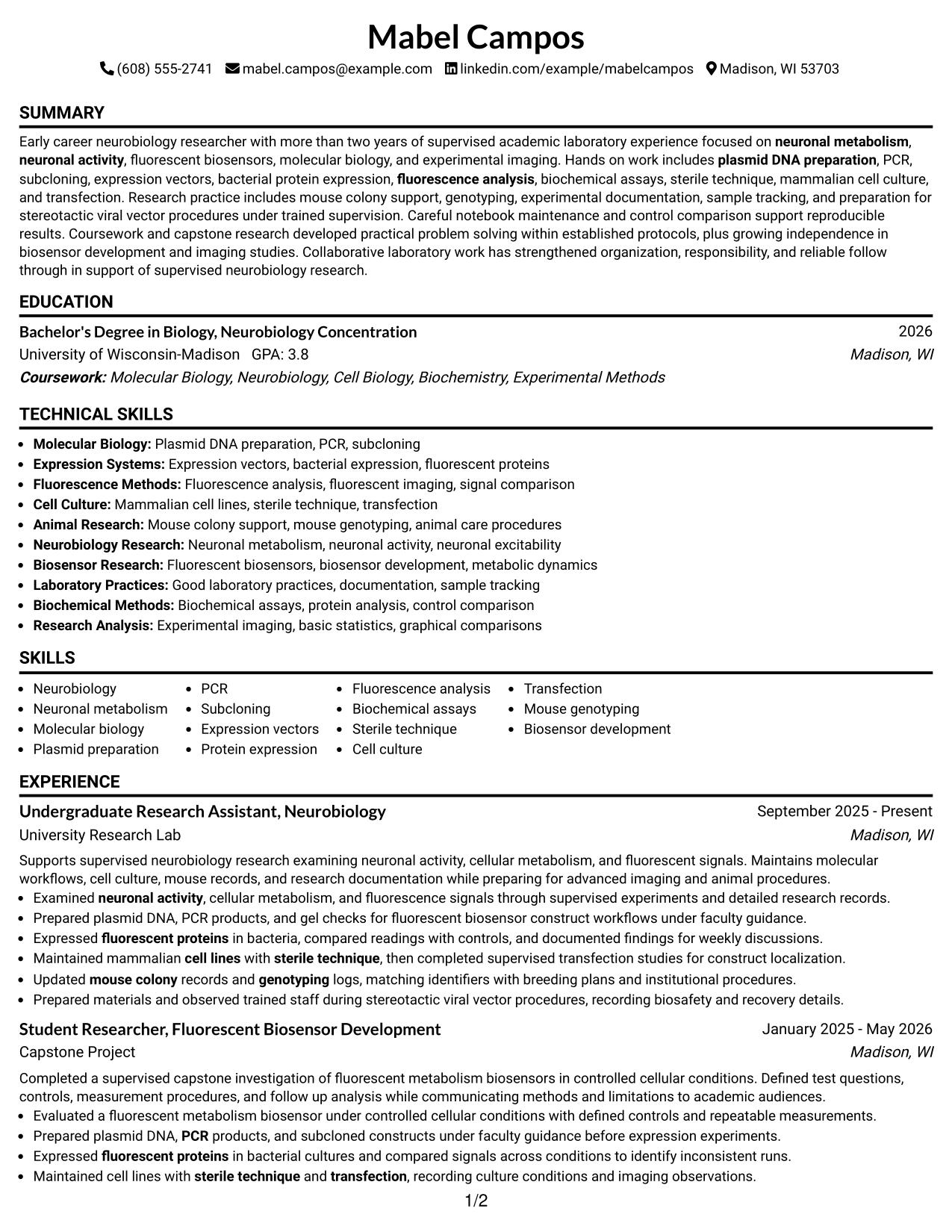
Resume Example Page 1

This guide shows you how to build a Research Assistant - Neurobiology resume that is clear, focused, and easy to review. You will learn how to organize research evidence and compare 7 layouts without changing the underlying resume.

Strong resumes for this role connect laboratory work with careful research practice. Useful sections can show molecular biology methods, fluorescent biosensor work, cell culture, mouse colony support, genotyping, documentation, troubleshooting, and supervised imaging or animal-procedure exposure.

The examples below show how section order, column structure, labels, and visual emphasis can change recruiter scanning while the same qualifications remain consistent. Use the notes to choose a format that keeps experience, education, skills, projects, and credentials easy to find.

What Makes a Great Research Assistant - Neurobiology Resume in 2026

A strong resume is clear, evidence-based, and easy to scan. It should show relevant research experience, laboratory methods, careful documentation, and dependable work under supervision.

Match useful terms to real experience, such as neuronal metabolism, molecular biology, PCR, fluorescence analysis, sterile technique, cell culture, mouse genotyping, biosensor development, and good laboratory practices.

The examples shown below are intentionally detailed to demonstrate a range of experiences, skills, accomplishments and relevant keywords. We prefer detailed resumes as they provide more context to the hiring managers and also help the ATS systems identify relevant qualifications and score your resume better for a match. But the length of a resume is an individual choice. If you want a one page resume, just keep the most relevant experience and information for the job. Note: Resume examples are for educational purposes only. Use only information that accurately reflects your experience and qualifications. References to real organizations do not imply affiliation or endorsement.

#1 Simple One Column Format Resume Example

A simple one-column flow gives recruiters a direct reading path through each major resume section.
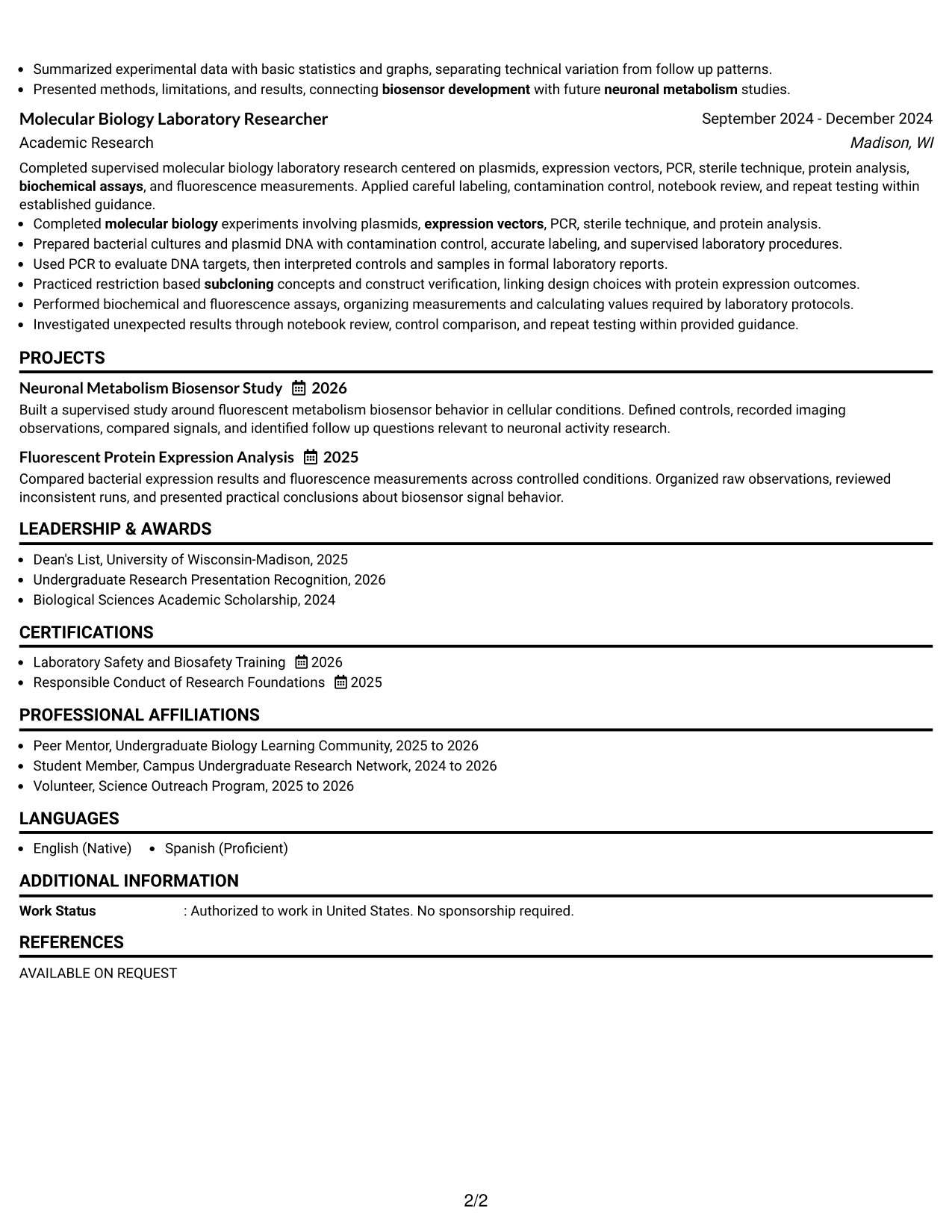
 
Resume Example Page 1   Resume Example Page 2

Why This Format Works

  • Linear reading order keeps research experience and education easy to follow.
  • Full-width sections give detailed experience bullets comfortable space without competing columns.
  • Clear section breaks help recruiters move from skills to projects and credentials.

Best For

  • Straightforward recruiter scanning
  • Detailed research experience
  • Longer accomplishment bullets
  • Clear ATS reading order
  • Applications needing conventional structure

Resume Keywords

  • Research Assistant
  • neurobiology
  • neuronal metabolism
  • neuronal activity
  • excitability
  • metabolic dynamics
  • mouse colony
  • genotyping
  • plasmid DNA preparation
  • PCR
  • subcloning
  • biochemical assays
  • bacterial expression
  • fluorescent proteins
  • fluorescence analysis
See all keywords
 

#2 Plain One Column with Shaded Labels Resume Example

Shaded section labels make a one-column resume easier for recruiters to navigate without changing its reading order.
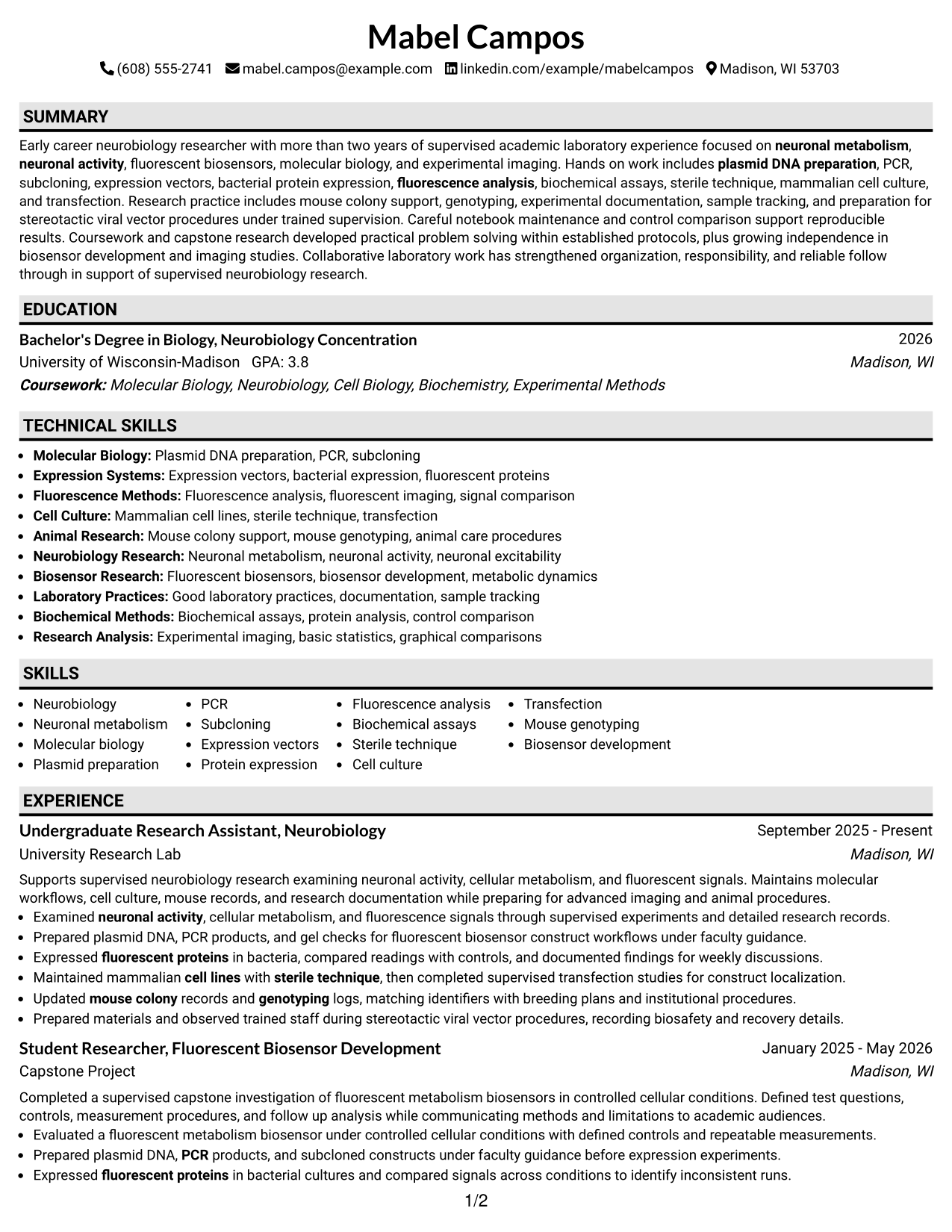
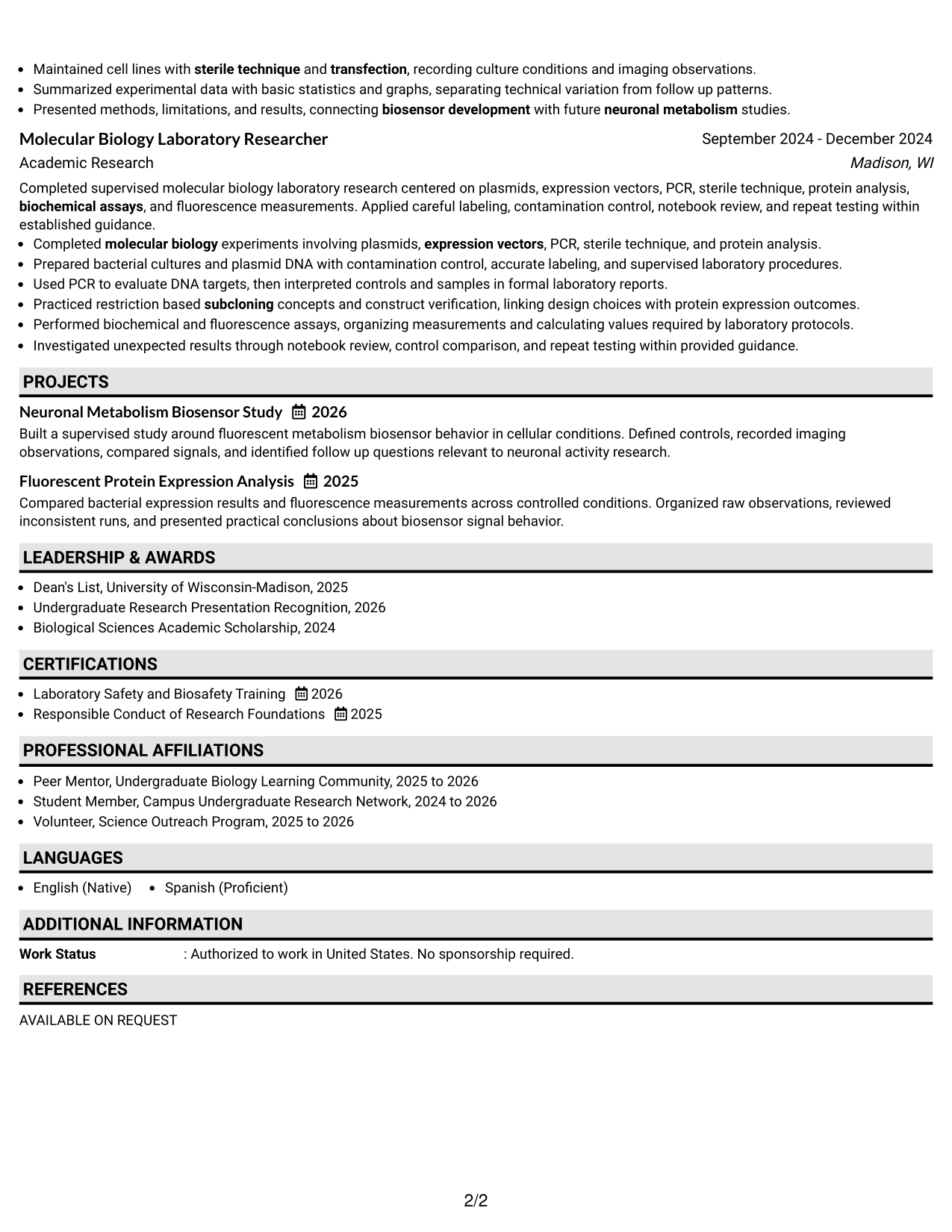
 
Resume Example Page 1   Resume Example Page 2

Why This Format Works

  • Shaded labels separate experience, skills, education, and credentials at a glance.
  • Single-column structure preserves a predictable top-to-bottom review of the full resume.
  • Visible section boundaries help dense research content feel easier to navigate.

Best For

  • Readers who value strong section markers
  • Research resumes with several section types
  • Traditional top-to-bottom review
  • Content needing clearer visual separation
  • Applications with substantial supporting credentials
 

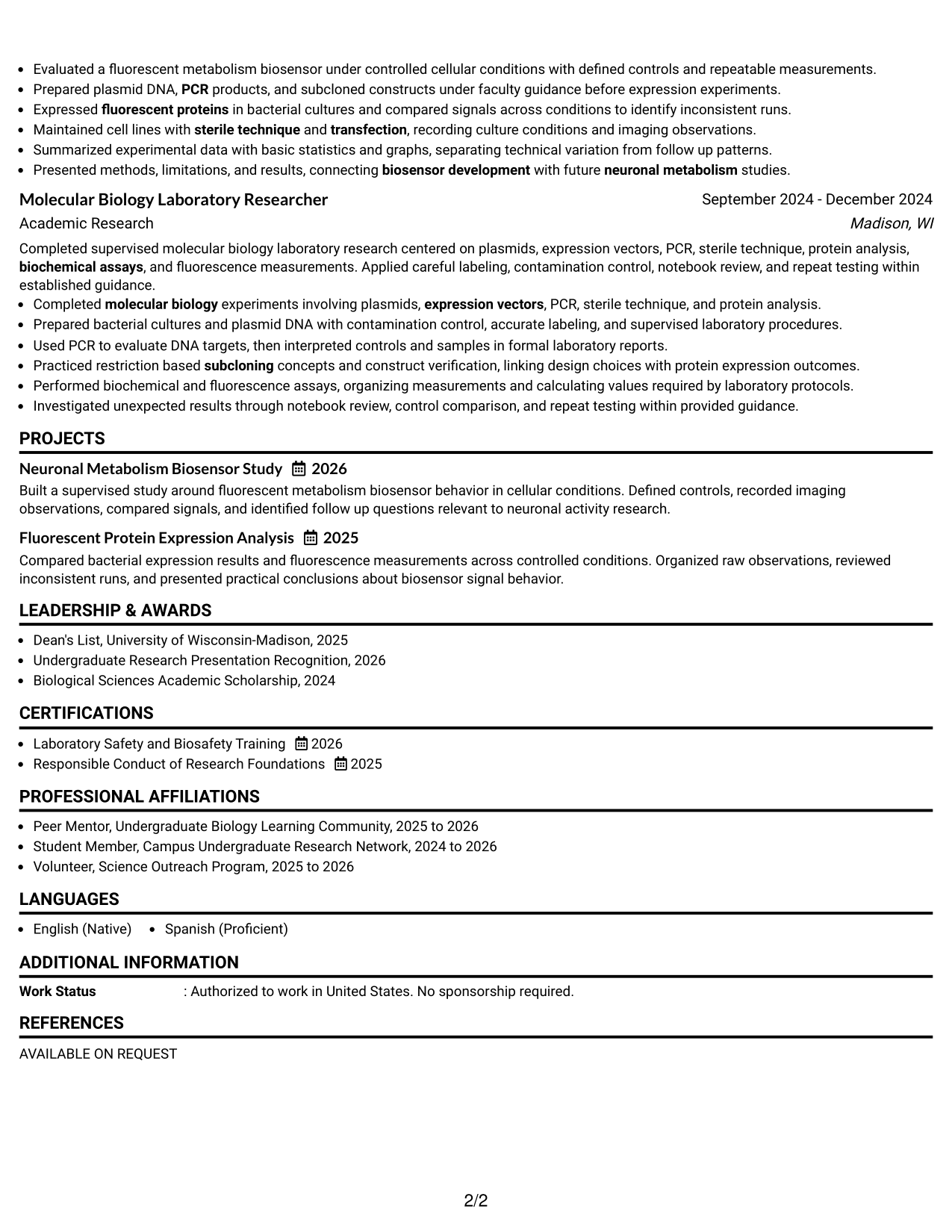
#3 One Column Format with Photo Right Resume Example

A right-side photo adds personal identification while the one-column body keeps recruiter scanning direct.
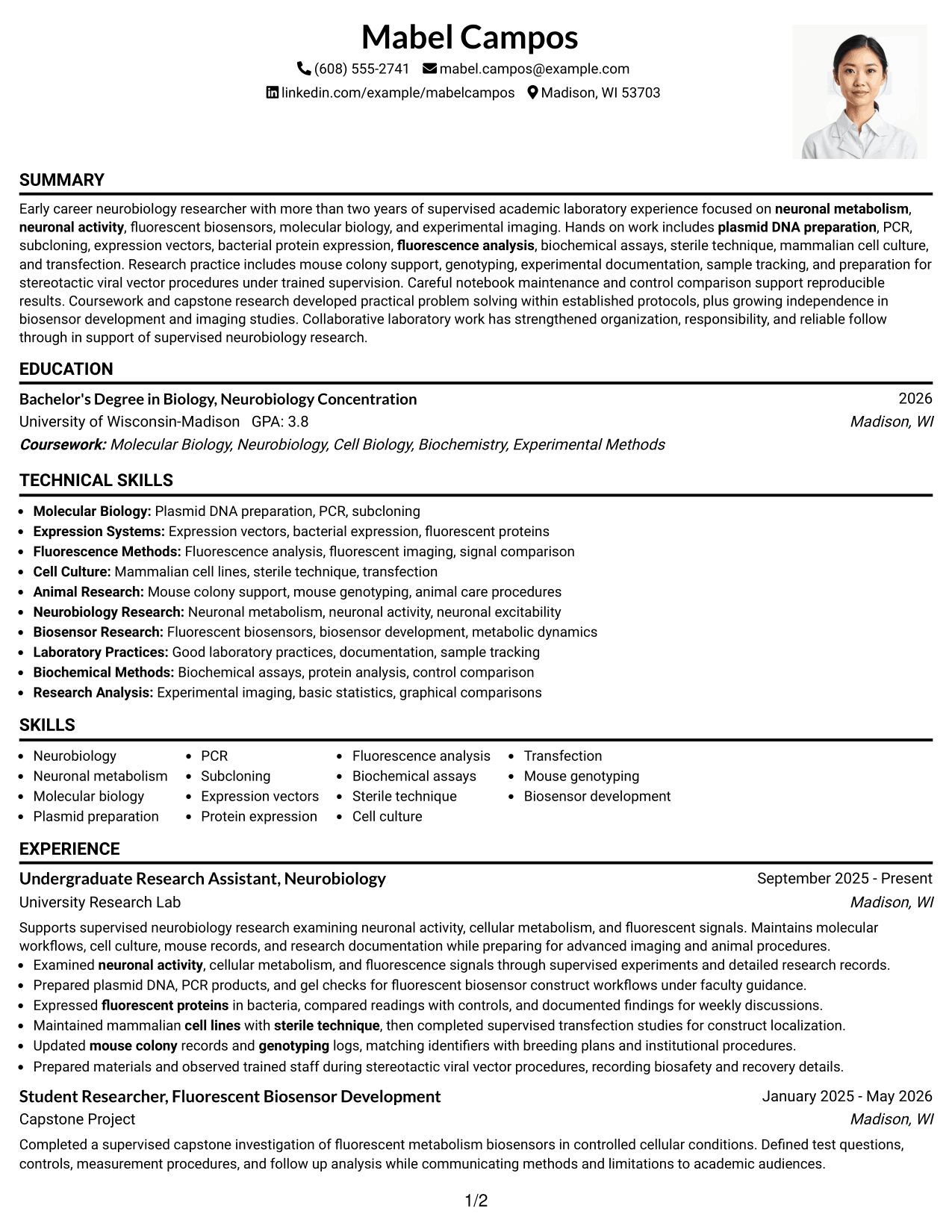
 
Resume Example Page 1   Resume Example Page 2

Why This Format Works

  • One-column body keeps experience and project details in a steady sequence.
  • Photo stays in the header area without dividing the main resume content.
  • Wide content space supports readable bullets for research and academic evidence.

Best For

  • Regions where resume photos are customary
  • Direct one-column reading
  • Research histories needing wide text space
  • Applicants balancing projects and experience
  • International applications allowing photos
 

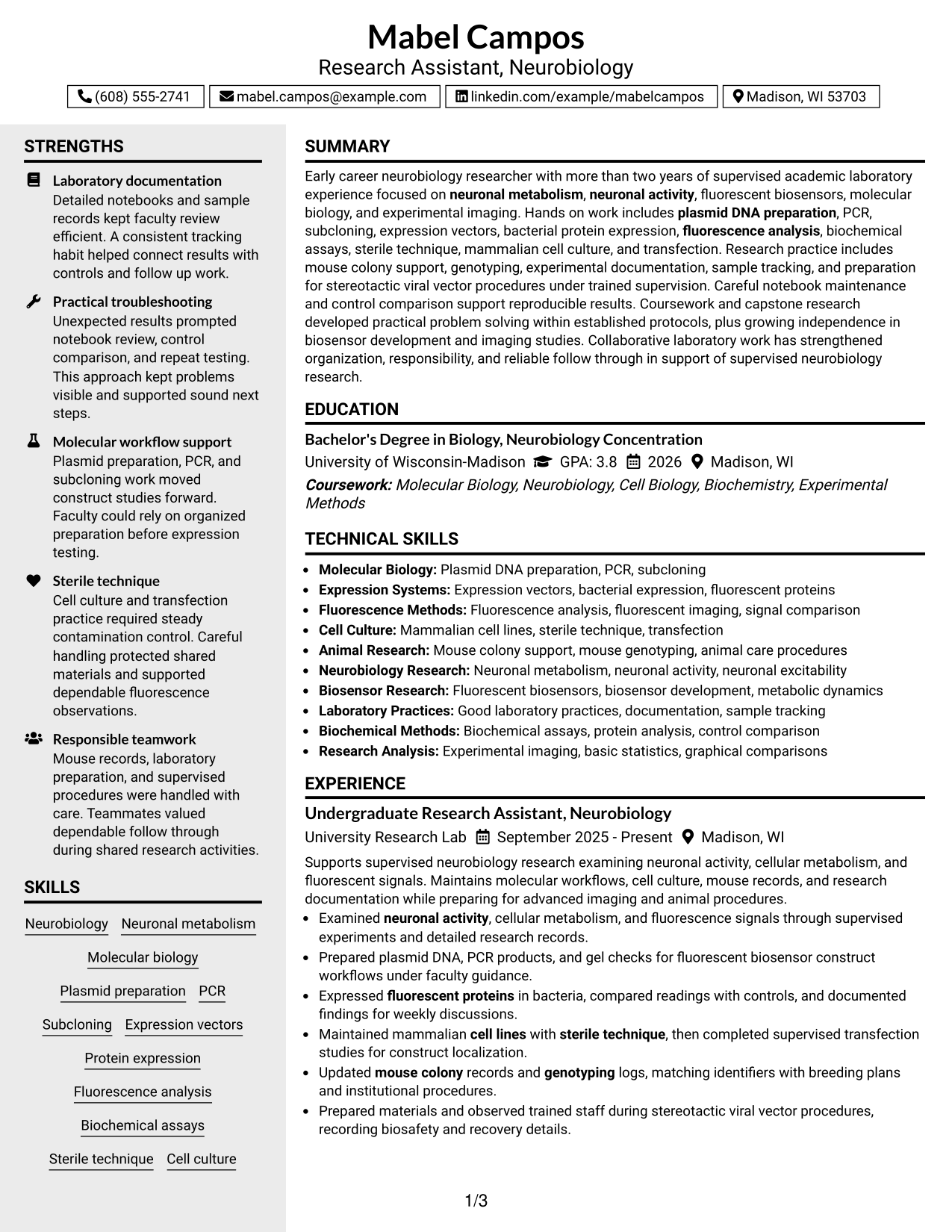
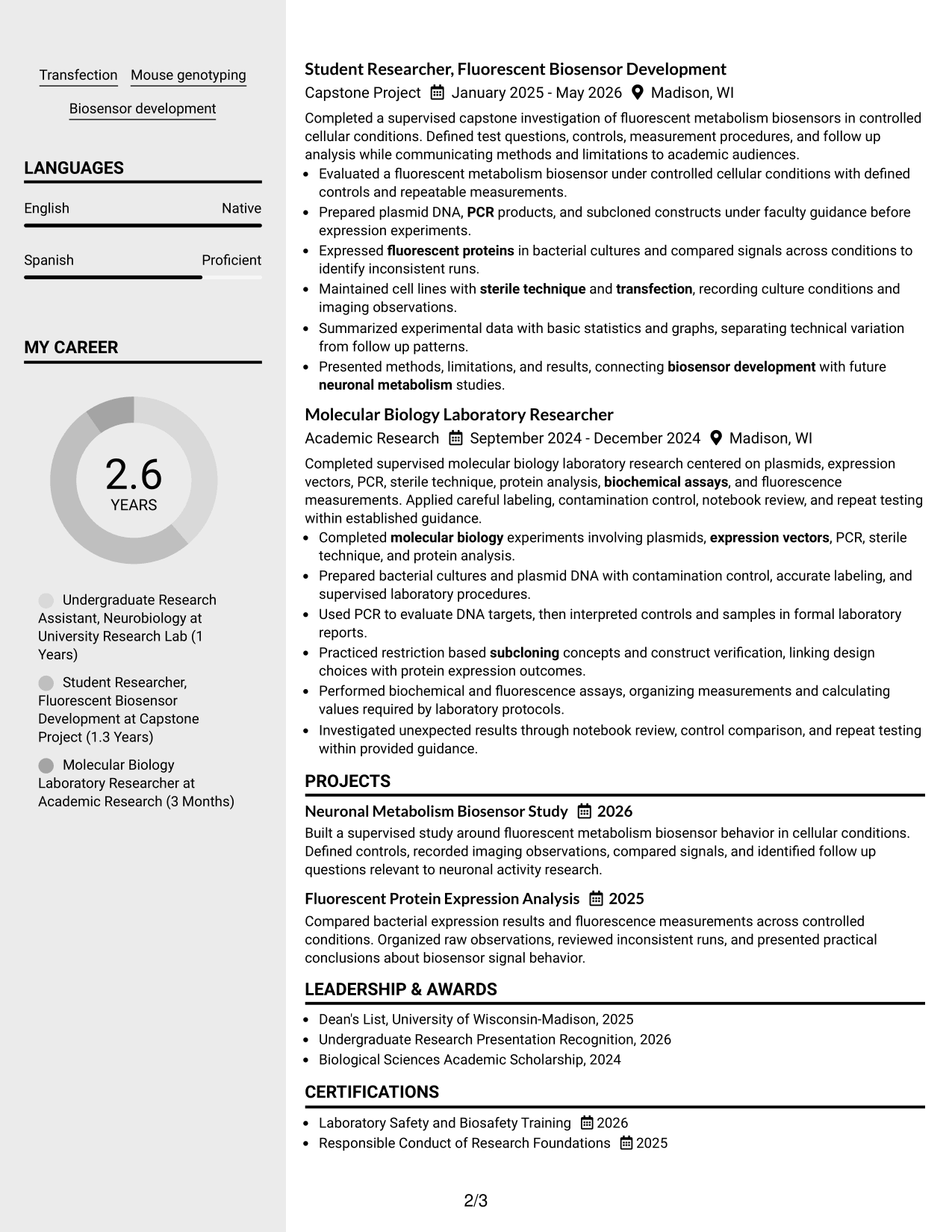
#4 Clean Two Column Sidebar Format Resume Example

A clean two-column sidebar lets recruiters scan supporting details beside the main experience narrative.
 
Resume Example Page 1   Resume Example Page 2

Why This Format Works

  • Sidebar space separates compact skills and credentials from detailed experience sections.
  • Main column preserves room for research achievements and project explanations.
  • Parallel organization helps recruiters find supporting qualifications without interrupting experience review.

Best For

  • Skill-heavy research resumes
  • Compact credentials beside experience
  • Readers comparing qualifications quickly
  • Applications with varied laboratory methods
  • Balanced detail and quick reference


#5 Two Column Format Resume Example

A balanced two-column body helps recruiters compare major resume sections without relying on a separate sidebar.
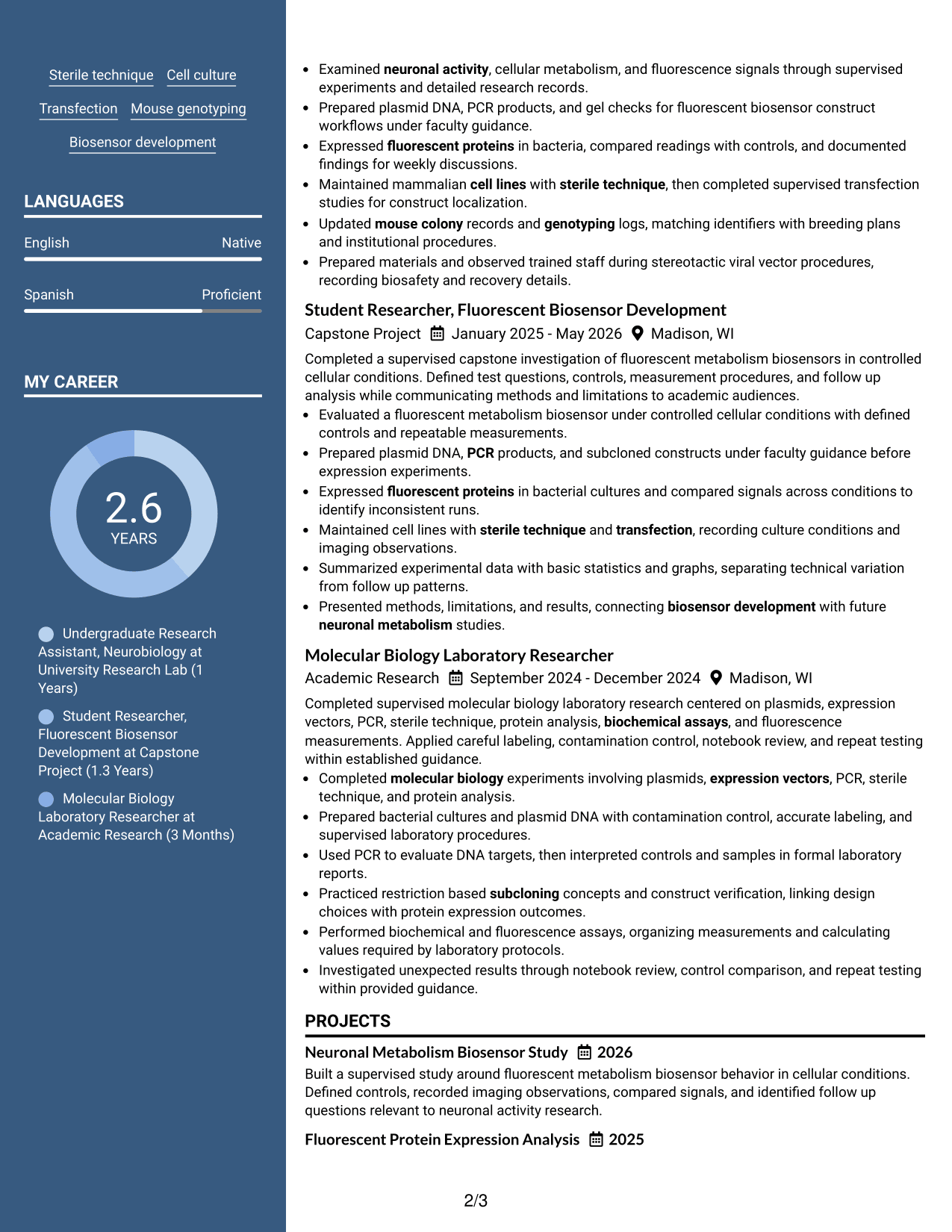
 
Resume Example Page 1   Resume Example Page 2

Why This Format Works

  • Two-column structure gives multiple content categories visible space during initial review.
  • Section grouping can keep education and skills distinct from deeper experience details.
  • Balanced columns reduce long vertical runs while preserving clear section separation.

Best For

  • Resumes with several equally important sections
  • Side-by-side content comparison
  • Moderate research detail
  • Education and skills visibility
  • Readers who prefer compact organization
 

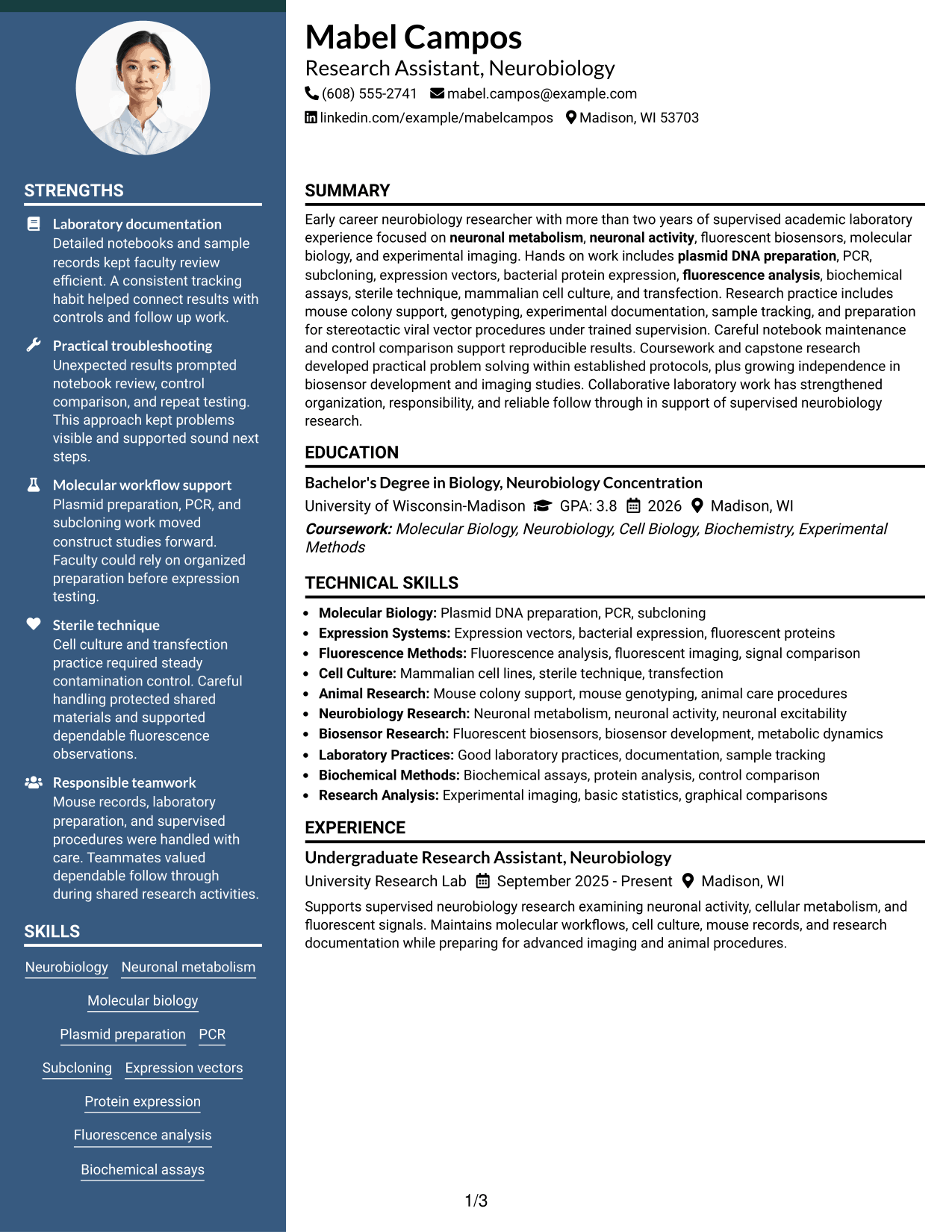
#6 Photo Header Two Column Format Resume Example

A photo header with two body columns combines personal identification with compact recruiter navigation.
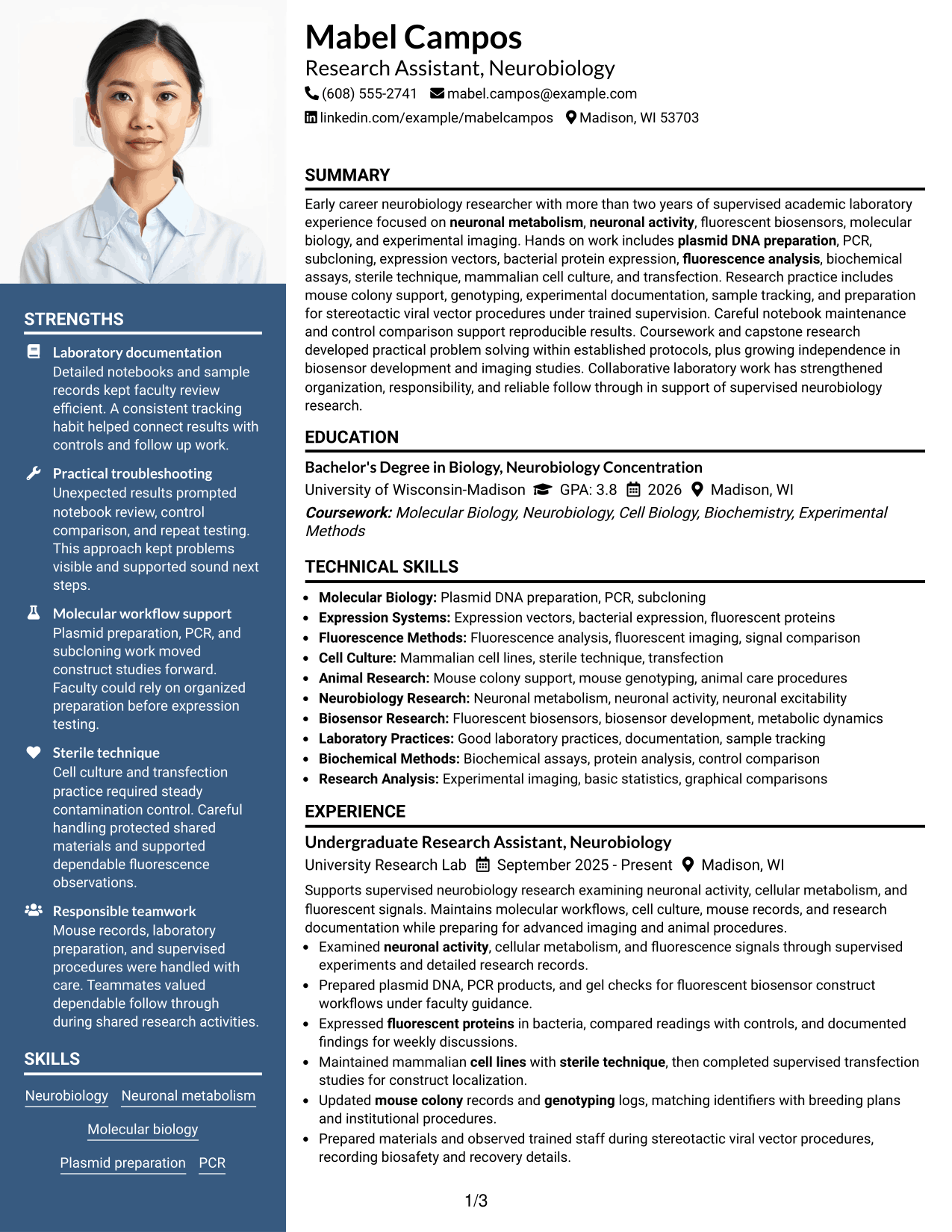
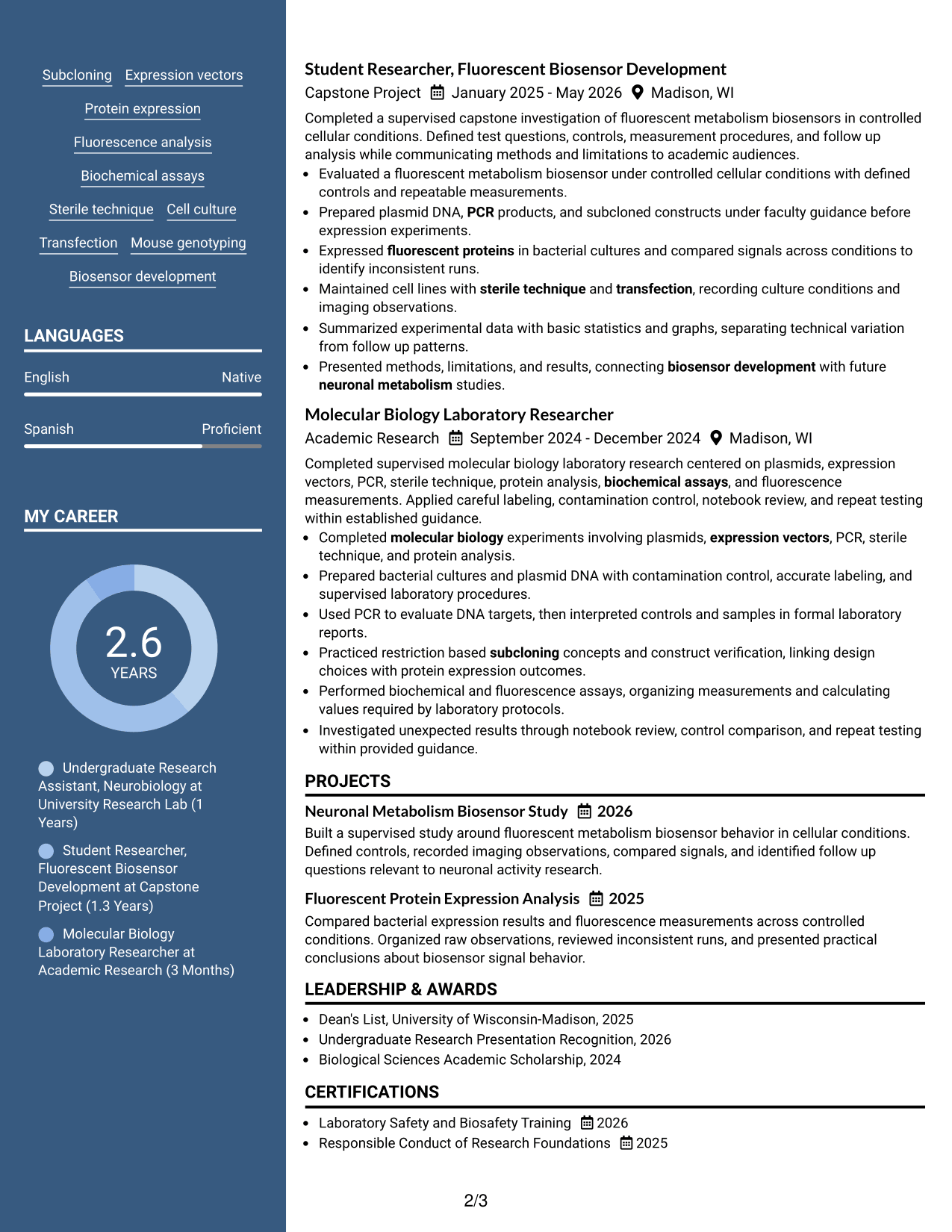
 
Resume Example Page 1   Resume Example Page 2

Why This Format Works

  • Two body columns separate supporting qualifications from longer experience and project content.
  • Header photo remains distinct from the sections that carry research evidence.
  • Compact organization helps recruiters move between credentials, education, and experience efficiently.

Best For

  • Markets where professional photos are expected
  • Compact two-column organization
  • Resumes combining projects and credentials
  • Applications with many supporting sections
  • Readers needing quick cross-section navigation
 

#7 Simple Two Column Format Resume Example

A simple two-column layout gives recruiters quick access to supporting sections while keeping the design restrained.
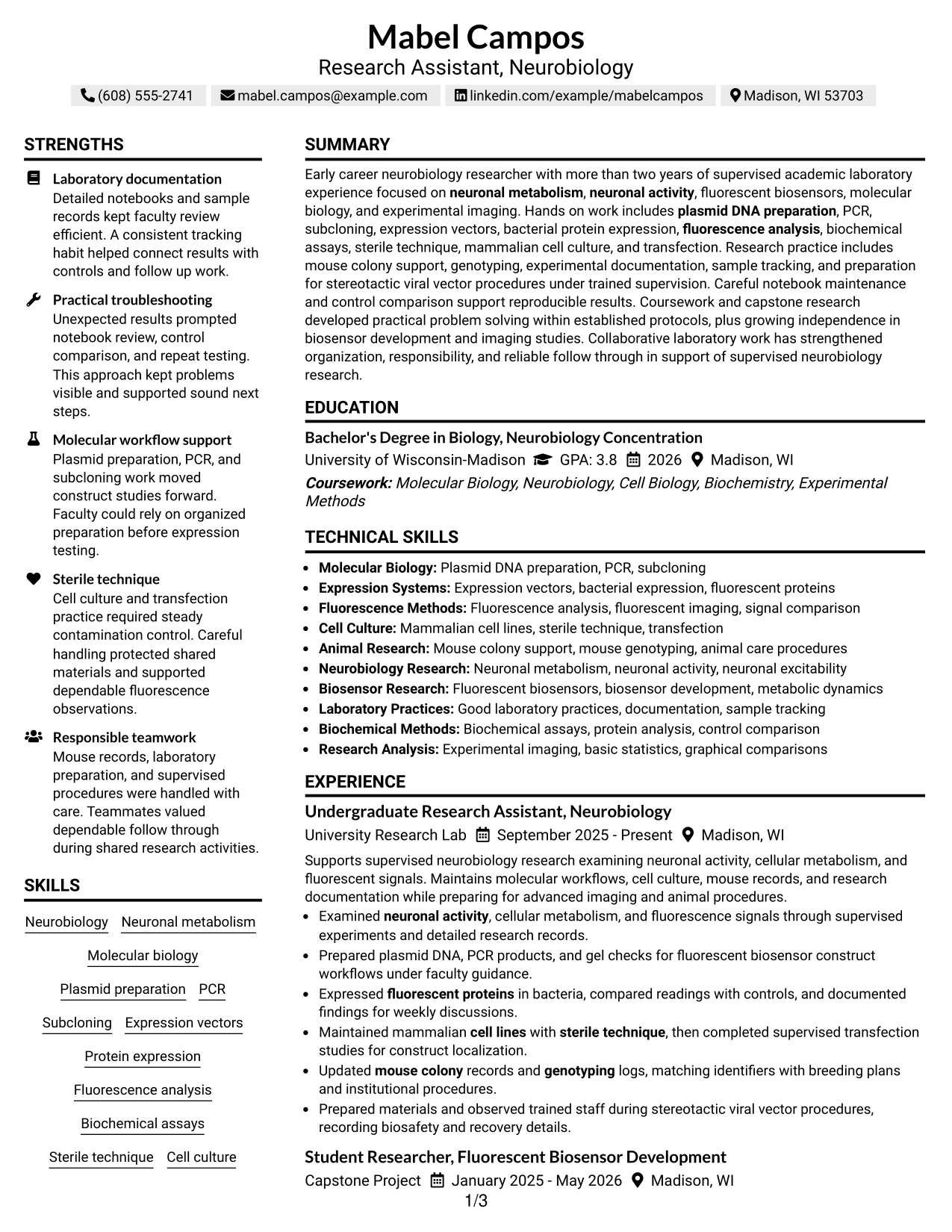
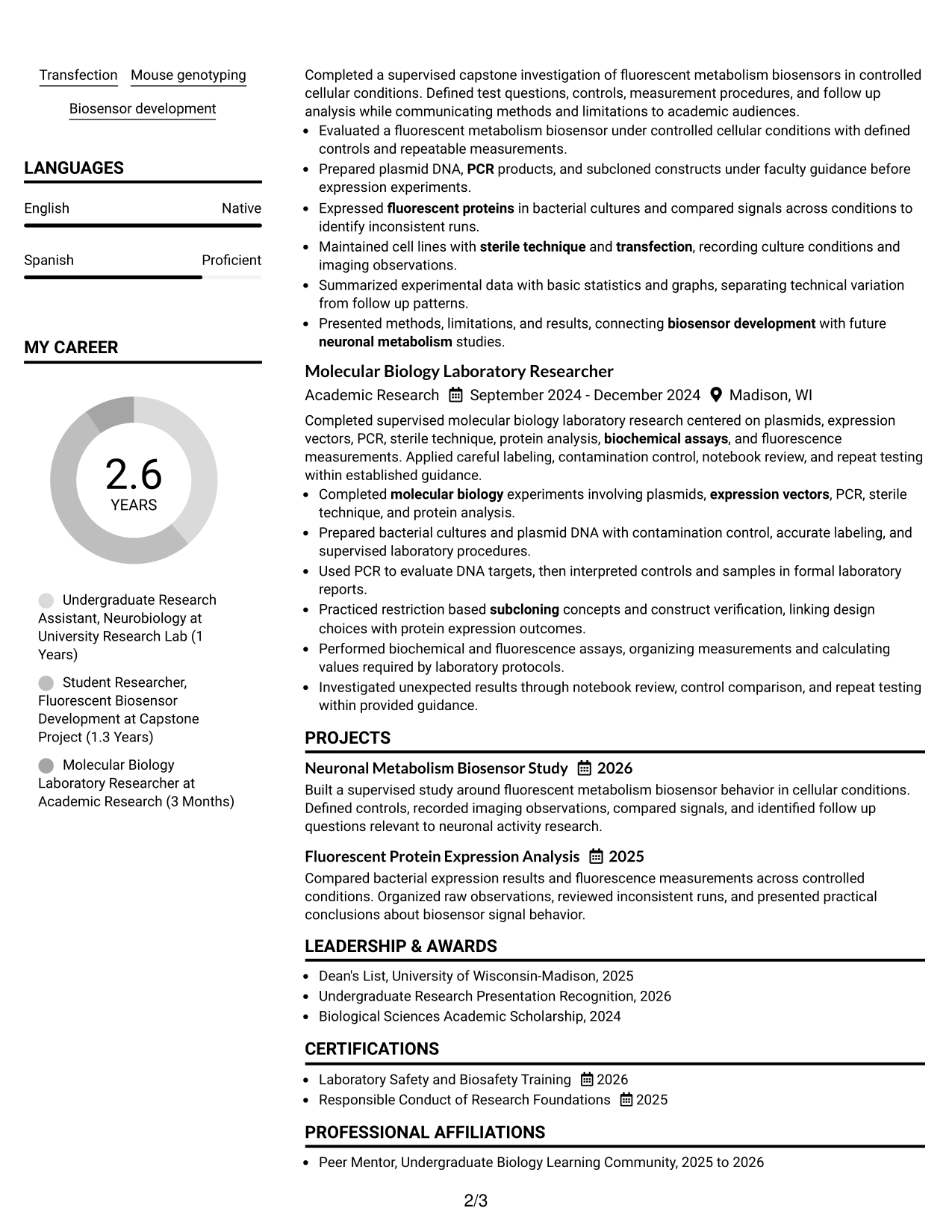
 
Resume Example Page 1   Resume Example Page 2

Why This Format Works

  • Simple columns divide detailed experience from shorter supporting resume sections.
  • Restrained styling keeps attention on research history, education, and qualifications.
  • Defined content areas make varied evidence easier to locate during a fast review.

Best For

  • Conservative two-column applications
  • Research resumes with mixed content lengths
  • Quick access to supporting sections
  • Readers preferring low-decoration layouts
  • Experience plus concise qualification groups


Why Build Your Research Assistant - Neurobiology Resume with ResumeInMinutes

ResumeInMinutes helps you turn research experience, education, laboratory methods, projects, and credentials into a clear resume that is easier to review and adapt.

  • ATS-friendly section structure
  • Research experience organization
  • Laboratory skills grouping
  • Project and education sections
  • Free PDF resume previews
  • Resume customization support

You can adjust section order, wording, and visual style while keeping the resume focused on the exact Research Assistant - Neurobiology role and the evidence you can support.


See Also


Frequently Asked Questions

Are these Research Assistant - Neurobiology resume templates ATS-friendly?

They use clear headings and structured resume sections that support ATS reading. Keep keywords tied to evidence you can support, including research methods, laboratory practices, and relevant technical skills.

Are these 7 different resumes?

No. The guide shows one Research Assistant - Neurobiology resume in different visual layouts so you can compare organization and scanning without changing the candidate's facts.

What should a Research Assistant - Neurobiology resume include?

Include a focused summary, research experience, education, relevant projects, laboratory skills, certifications, and clear bullets that show methods, responsibilities, documentation, troubleshooting, and supervised research work.

Can I download the resume templates as PDFs?

Yes. Each resume style includes a free PDF preview so you can compare the format before choosing one for your application.

Which resume style works well for neurobiology research applications?

A clear one-column format is useful when you want a direct reading order. A two-column format can help separate skills and credentials from detailed research experience when the layout remains easy to scan.

How should I describe supervised laboratory work?

State your level of responsibility accurately. Use words such as supported, prepared, observed, maintained, or performed under supervision when they match your actual work, and avoid implying independent proficiency you have not earned.

Should I include a photo on my resume?

For U.S. applications, a no-photo resume is generally the safer choice. In other regions, follow local hiring norms and the expectations of the organization.

Can I customize these resume templates?

Yes. You can change resume text, section order, layout, and design while keeping the content accurate and targeted to the Research Assistant - Neurobiology role.

ATS score 78%

How we calculate this score

  • Keywords: 60% of the total. AI extracts keywords from your job description. If you do not provide one, a standard job description for the title matching your resume is used. This is not a match to a specific vacancy.
  • Text-based resume: 20%. The text resume assessed here receives 100 for this part.
  • Resume quality: 20%. We start at 100 and subtract points for issues found by our resume checks, down to a minimum of zero.
  • Keyword coverage = 100 × (confirmed matches + 0.8 × possible matches) ÷ total keywords, rounded and capped at 100. Possible matches still need checking. Saved generation audits use their saved keyword percentage.
  • Final score = 60% of keyword coverage + 20% of the text score + 20% of the quality score, rounded to a whole number. Without keywords, no overall ATS score is available.

What this score means

Our scores are estimates, not employer ratings. They may contain errors and do not guarantee accurate parsing, a ranking, an interview, or a job. Check your document against the employer’s requirements. You are responsible for relying on this score.

Terms and Conditions

Score weights: Keywords 60% · Text based resume 20% · Resume quality 20%

Live keyword match: 29 of 46 (63%) · Resume quality: 100%

Resume quality 100% · Weight 20% · Issues (0)

Details
  • ✓Name present: Mabel Campos
  • ✓Email format: mabel.campos@example.com
  • ✓Phone format: (608) 555-2741
  • ✓Experience 1: Job title: Undergraduate Research Assistant, Neurobiology
  • ✓Experience 1: Company name: University Research Lab
  • ✓Experience 1: Employment dates: September 2025 - Present
  • ✓Experience 1: Description or achievements: Present
  • ✓Experience 2: Job title: Student Researcher, Fluorescent Biosensor Development
  • ✓Experience 2: Company name: Capstone Project
  • ✓Experience 2: Employment dates: January 2025 - May 2026
  • ✓Experience 2: Description or achievements: Present
  • ✓Experience 3: Job title: Molecular Biology Laboratory Researcher
  • ✓Experience 3: Company name: Academic Research
  • ✓Experience 3: Employment dates: September 2024 - December 2024
  • ✓Experience 3: Description or achievements: Present
  • ✓No placeholder fields
  • ✓No repeated achievement bullets
  • ✓No empty bullets

No issues found by the current checks.

Text Based Resume 100% · Weight 20%

Parsed text
Mabel Campos
(608) 555-2741
mabel.campos@example.com
linkedin.com/example/mabelcampos
Madison, WI 53703
SUMMARY
Early career neurobiology researcher with more than two years of supervised academic laboratory experience focused on neuronal metabolism, neuronal activity, fluorescent biosensors, molecular biology, and experimental imaging. Hands on work includes plasmid DNA preparation, PCR, subcloning, expression vectors, bacterial protein expression, fluorescence analysis, biochemical assays, sterile technique, mammalian cell culture, and transfection. Research practice includes mouse colony support, genotyping, experimental documentation, sample tracking, and preparation for stereotactic viral vector procedures under trained supervision. Careful notebook maintenance and control comparison support reproducible results. Coursework and capstone research developed practical problem solving within established protocols, plus growing independence in biosensor development and imaging studies. Collaborative laboratory work has strengthened organization, responsibility, and reliable follow through in support of supervised neurobiology research.
EDUCATION
Bachelor's Degree in Biology, Neurobiology Concentration
University of Wisconsin-Madison
GPA: 3.8
2026
Madison, WI
Coursework: Molecular Biology, Neurobiology, Cell Biology, Biochemistry, Experimental Methods
TECHNICAL SKILLS
Molecular Biology: Plasmid DNA preparation, PCR, subcloning
Expression Systems: Expression vectors, bacterial expression, fluorescent proteins
Fluorescence Methods: Fluorescence analysis, fluorescent imaging, signal comparison
Cell Culture: Mammalian cell lines, sterile technique, transfection
Animal Research: Mouse colony support, mouse genotyping, animal care procedures
Neurobiology Research: Neuronal metabolism, neuronal activity, neuronal excitability
Biosensor Research: Fluorescent biosensors, biosensor development, metabolic dynamics
Laboratory Practices: Good laboratory practices, documentation, sample tracking
Biochemical Methods: Biochemical assays, protein analysis, control comparison
Research Analysis: Experimental imaging, basic statistics, graphical comparisons
SKILLS
Neurobiology
Neuronal metabolism
Molecular biology
Plasmid preparation
PCR
Subcloning
Expression vectors
Protein expression
Fluorescence analysis
Biochemical assays
Sterile technique
Cell culture
Transfection
Mouse genotyping
Biosensor development
EXPERIENCE
Undergraduate Research Assistant, Neurobiology
University Research Lab
September 2025 - Present
Madison, WI
Supports supervised neurobiology research examining neuronal activity, cellular metabolism, and fluorescent signals. Maintains molecular workflows, cell culture, mouse records, and research documentation while preparing for advanced imaging and animal procedures.
Examined neuronal activity, cellular metabolism, and fluorescence signals through supervised experiments and detailed research records.
Prepared plasmid DNA, PCR products, and gel checks for fluorescent biosensor construct workflows under faculty guidance.
Expressed fluorescent proteins in bacteria, compared readings with controls, and documented findings for weekly discussions.
Maintained mammalian cell lines with sterile technique, then completed supervised transfection studies for construct localization.
Updated mouse colony records and genotyping logs, matching identifiers with breeding plans and institutional procedures.
Prepared materials and observed trained staff during stereotactic viral vector procedures, recording biosafety and recovery details.
Student Researcher, Fluorescent Biosensor Development
Capstone Project
January 2025 - May 2026
Madison, WI
Completed a supervised capstone investigation of fluorescent metabolism biosensors in controlled cellular conditions. Defined test questions, controls, measurement procedures, and follow up analysis while communicating methods and limitations to academic audiences.
Evaluated a fluorescent metabolism biosensor under controlled cellular conditions with defined controls and repeatable measurements.
Prepared plasmid DNA, PCR products, and subcloned constructs under faculty guidance before expression experiments.
Expressed fluorescent proteins in bacterial cultures and compared signals across conditions to identify inconsistent runs.
Maintained cell lines with sterile technique and transfection, recording culture conditions and imaging observations.
Summarized experimental data with basic statistics and graphs, separating technical variation from follow up patterns.
Presented methods, limitations, and results, connecting biosensor development with future neuronal metabolism studies.
Molecular Biology Laboratory Researcher
Academic Research
September 2024 - December 2024
Madison, WI
Completed supervised molecular biology laboratory research centered on plasmids, expression vectors, PCR, sterile technique, protein analysis, biochemical assays, and fluorescence measurements. Applied careful labeling, contamination control, notebook review, and repeat testing within established guidance.
Completed molecular biology experiments involving plasmids, expression vectors, PCR, sterile technique, and protein analysis.
Prepared bacterial cultures and plasmid DNA with contamination control, accurate labeling, and supervised laboratory procedures.
Used PCR to evaluate DNA targets, then interpreted controls and samples in formal laboratory reports.
Practiced restriction based subcloning concepts and construct verification, linking design choices with protein expression outcomes.
Performed biochemical and fluorescence assays, organizing measurements and calculating values required by laboratory protocols.
Investigated unexpected results through notebook review, control comparison, and repeat testing within provided guidance.
PROJECTS
Neuronal Metabolism Biosensor Study
2026
Built a supervised study around fluorescent metabolism biosensor behavior in cellular conditions. Defined controls, recorded imaging observations, compared signals, and identified follow up questions relevant to neuronal activity research.
Fluorescent Protein Expression Analysis
2025
Compared bacterial expression results and fluorescence measurements across controlled conditions. Organized raw observations, reviewed inconsistent runs, and presented practical conclusions about biosensor signal behavior.
LEADERSHIP & AWARDS
Dean's List, University of Wisconsin-Madison, 2025
Undergraduate Research Presentation Recognition, 2026
Biological Sciences Academic Scholarship, 2024
CERTIFICATIONS
Laboratory Safety and Biosafety Training
2026
Responsible Conduct of Research Foundations
2025
PROFESSIONAL AFFILIATIONS
Peer Mentor, Undergraduate Biology Learning Community, 2025 to 2026
Student Member, Campus Undergraduate Research Network, 2024 to 2026
Volunteer, Science Outreach Program, 2025 to 2026
LANGUAGES
English (Native)
Spanish (Proficient)
ADDITIONAL INFORMATION
Work Status
: Authorized to work in United States. No sponsorship required.
REFERENCES
AVAILABLE ON REQUEST

Matched keywords (29)

  • Research Assistant
  • neurobiology
  • neuronal metabolism
  • neuronal activity
  • excitability
  • metabolic dynamics
  • mouse colony
  • genotyping
  • plasmid DNA preparation
  • PCR
  • subcloning
  • biochemical assays
  • bacterial expression
  • fluorescent proteins
  • fluorescence analysis
  • cell lines
  • transfection
  • sterile technique
  • Good laboratory practices
  • documentation
  • organization
  • problem solving
  • molecular biology
  • plasmid
  • expression vectors
  • Research
  • biosensor development
  • supervision
  • Training

Missing keywords (17)

  • seizure prevention
  • fluorescent protein biosensors
  • mouse brain
  • ex vivo imaging
  • in vivo imaging
  • stereotactic mouse surgery
  • viral expression vectors
  • attention to detail
  • troubleshooting
  • mouse experience
  • biosensor imaging
  • team member
  • animal activities
  • tissue culture
  • college level education
  • related discipline
  • procedural guidance
Disclaimer: All names, images, contact information, employment histories, achievements, security clearances, military credentials, and other qualifications shown in this content are fictional and used for illustrative purposes only. Any resemblance to actual persons, living or deceased, is purely coincidental.

Resume and cover-letter examples and recommendations in this article reflect general best practices and professional experience and are provided for guidance only. Results may vary based on role, industry, region, and hiring organization.

Content Accuracy and Verification: To the fullest extent permitted by applicable law, we do not represent or warrant that resume or cover-letter guidance, examples, recommendations, or related information are accurate, complete, current, error-free, or suitable for any particular purpose. You are responsible for independently reviewing and verifying the information before relying on it.

ATS and Cover-Letter Scores: ATS scores are estimates calculated using our own formula, informed by publicly available guidance on resume formatting and keyword matching. They are not scores issued or endorsed by an ATS provider or employer. Cover-letter scores are also our own assessments. Parsing, weighting, screening criteria, and results vary between systems, employers, job descriptions, and document formats. No score guarantees successful parsing, a particular ranking, an interview, or employment. Use scores as general guidance and independently check your documents against the employer’s requirements. To the fullest extent permitted by applicable law, we accept no liability for errors in scores or parsing, or losses arising from reliance on these assessments. Nothing in this notice excludes liability or limits consumer rights that cannot lawfully be excluded or limited.

Terms and Conditions
 
> JP 1 1
PDF Footer and Margins Setup
The margins are applied to the document, and the footer shows up in the preview and the PDF

Footer Font Settings

Are you applying for a specific job
so we can tailor your resume to it?
Are you applying for a specific job
so we can tailor your cover letter to it?
Type your details as text to generate a personalized resume Type your details as text to generate a personalized cover letter
Website link found! Ready to create resume from:
Drag the into the box to verify you're human.
Drop here

My Resumes

Displaying {number_of_files} files (out of {total_of_all_files} total)
Name File Type Last Modified: Description:

Rename File

Filename already exists!

Delete Files

Warning: This action is irreversible. Once you click submit, the files will be permanently deleted.

Heading text
Upload From Computer Upload
Select From Existing
LinkedIn
Drag & Drop files anywhere in this tab, or

Uploaded Files

Delete Name Last Updated Use This File
Select this to use the file for generating your resume and cover letter. Only one source—uploaded file, selected file, or LinkedIn text—can be used.

My Files

Resumes or cover letters you create will appear here. No files available yet.
Delete Name Last Updated Use This File
Select this to use the file for generating your resume and cover letter. Only one source—uploaded file, selected file, or LinkedIn text—can be used.

Add LinkedIn Profile PDF

You can download your LinkedIn profile as a PDF by opening linkedin.com in a web browser, clicking your profile photo, selecting the “More” or “Resources” button, and choosing “Save to PDF.” You can then attach the PDF using the Upload From Computer tab.

Paste Your LinkedIn Profile Text

If you have copied the LinkedIn profile text, paste it below. See how to copy your profile from LinkedIn

Select this to use the LinkedIn profile text for generating your resume and cover letter. Only one source—uploaded file, selected file, or LinkedIn text—can be used.

Try these controls

<
>