US English


7 Software Engineer, Engine Scalability Resume Templates with Example
By Ria · Last Updated On October 2, 2026
Resume Example Page 1

This practical guide shows you how to build a Software Engineer, Engine Scalability resume that is clear, focused, and easy to review. You will learn how to organize technical evidence and compare professional resume formats.

Strong resumes for this role connect C++ engine work with clear proof of performance thinking. Show how you handle mesh and geometry processing, level of detail, streaming, runtime loading, spatial data, and tradeoffs across CPU, GPU, memory, loading latency, visual quality, and frame time.

The complete resume example below appears in 7 ATS-friendly resume layouts. Use the format notes to decide how best to present experience, skills, projects, education, credentials, and measurable engineering results.

What Makes a Great Software Engineer, Engine Scalability Resume in 2026

A strong resume is easy to scan, evidence-based, and focused on production engine work. It should make ownership, performance analysis, and cross-team delivery clear.

Use grounded keywords such as C++, engine scalability, mesh processing, LOD, asset streaming, runtime loading, CPU profiling, GPU profiling, spatial data, and mobile performance.

The examples shown below are intentionally detailed to demonstrate a range of experiences, skills, accomplishments and relevant keywords. We prefer detailed resumes as they provide more context to the hiring managers and also help the ATS systems identify relevant qualifications and score your resume better for a match. But the length of a resume is an individual choice. If you want a one page resume, just keep the most relevant experience and information for the job. Note: Resume examples are for educational purposes only. Use only information that accurately reflects your experience and qualifications. References to real organizations do not imply affiliation or endorsement.

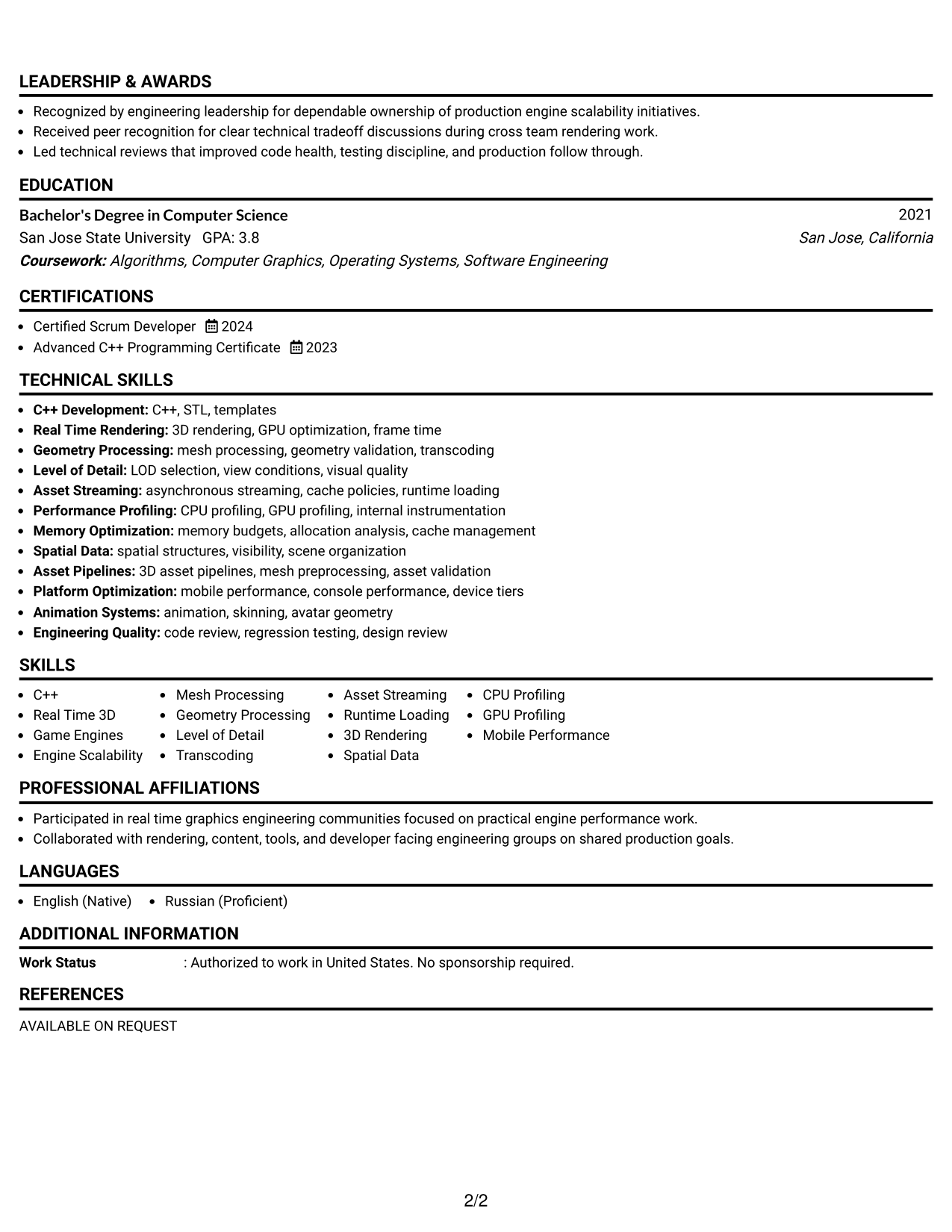
#1 Simple One Column Format Resume Example

A direct one-column reading order helps recruiters scan each resume section from top to bottom.
 
Resume Example Page 1   Resume Example Page 2

Why This Format Works

  • Linear reading keeps experience history easy to follow across several engineering roles.
  • Full-width sections give achievements enough space without competing with parallel content.
  • Skills, education, and credentials remain easy to locate in a steady sequence.

Best For

  • Detailed experience histories
  • Strong chronological progression
  • Technical resumes with dense bullets
  • Readers who prefer direct scanning
  • Software Engineer, Engine Scalability applications

Resume Keywords

  • Software engineer
  • engine scalability
  • C++
  • Game Engines
  • mesh processing
  • level of detail
  • LOD
  • transcoding
  • streaming
  • runtime loading
  • avatar geometry
  • CPU time
  • GPU time
  • memory
  • loading latency
See all keywords
 

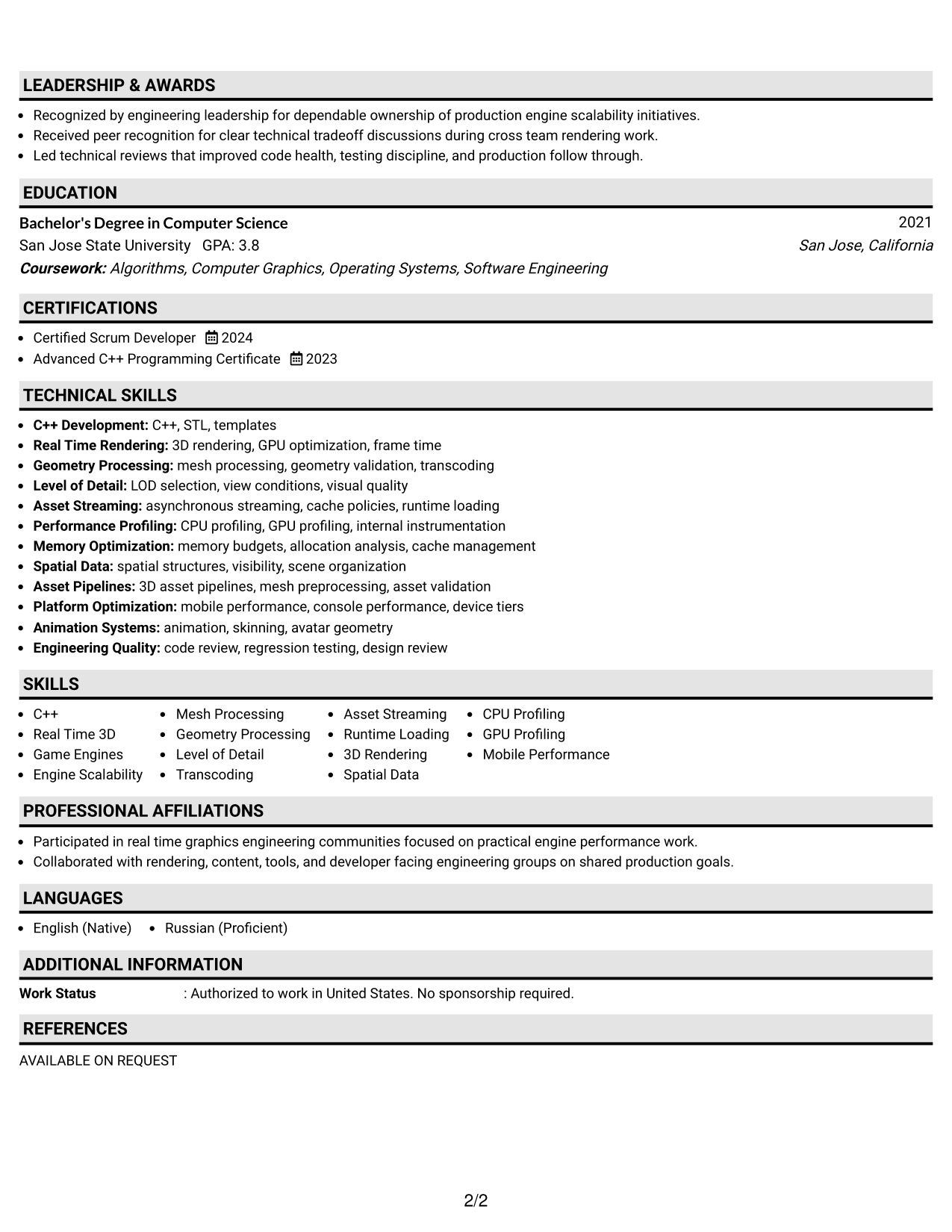
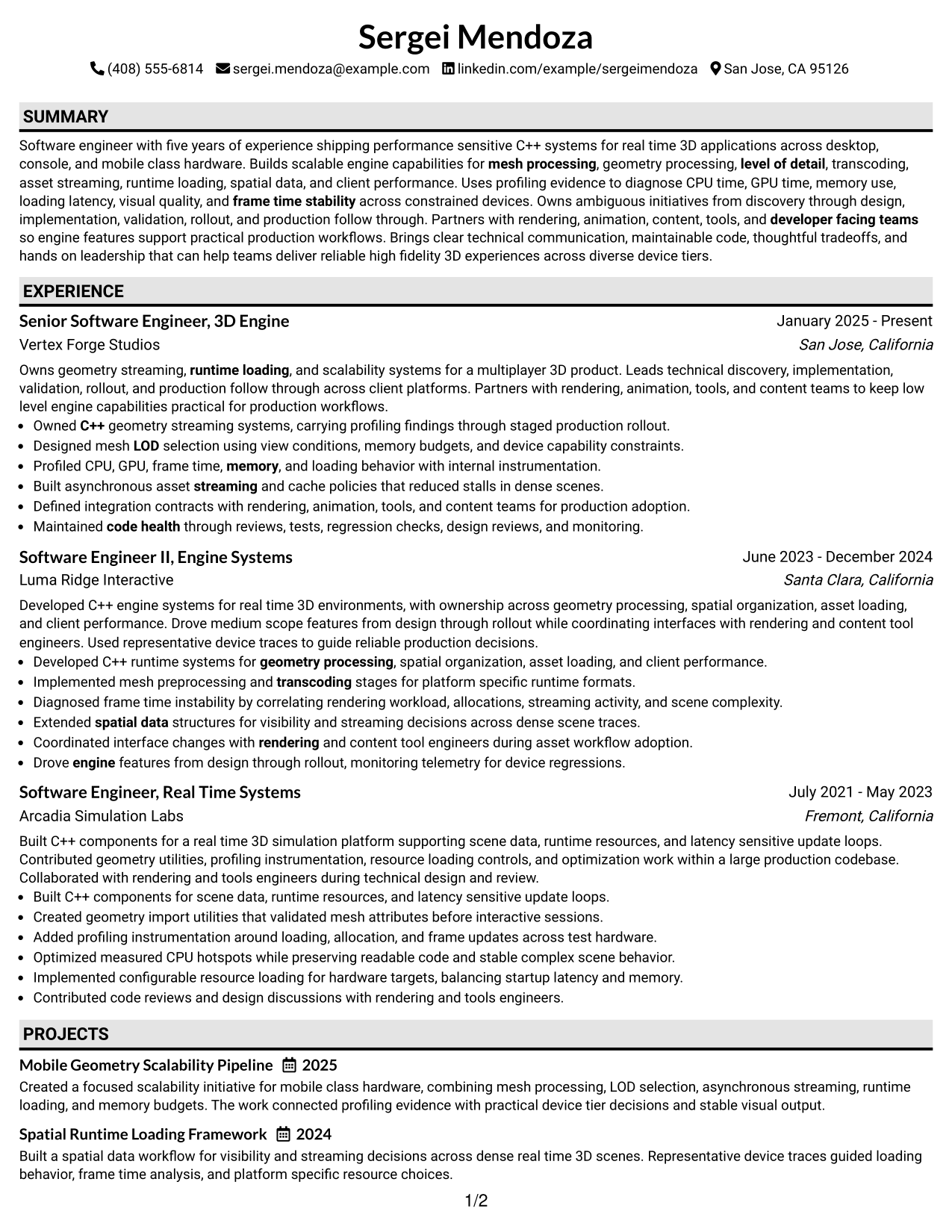
#2 Plain One Column with Shaded Labels Resume Example

Shaded section labels break the one-column flow into clear stops for faster recruiter scanning.
 
Resume Example Page 1   Resume Example Page 2

Why This Format Works

  • Shaded labels separate experience, skills, education, and credentials without changing reading order.
  • Clear section stops help reviewers return quickly to specific parts of the resume.
  • One-column structure keeps career progression intact while labels improve visual navigation.

Best For

  • Long resumes needing clearer section breaks
  • Reviewers comparing several resume sections
  • Career stories that need uninterrupted chronology
  • Applications needing restrained visual structure
  • Technical content with distinct categories
 

#3 One Column Format with Photo Right Resume Example

A right-side photo adds identity while the one-column body keeps recruiter scanning straightforward.
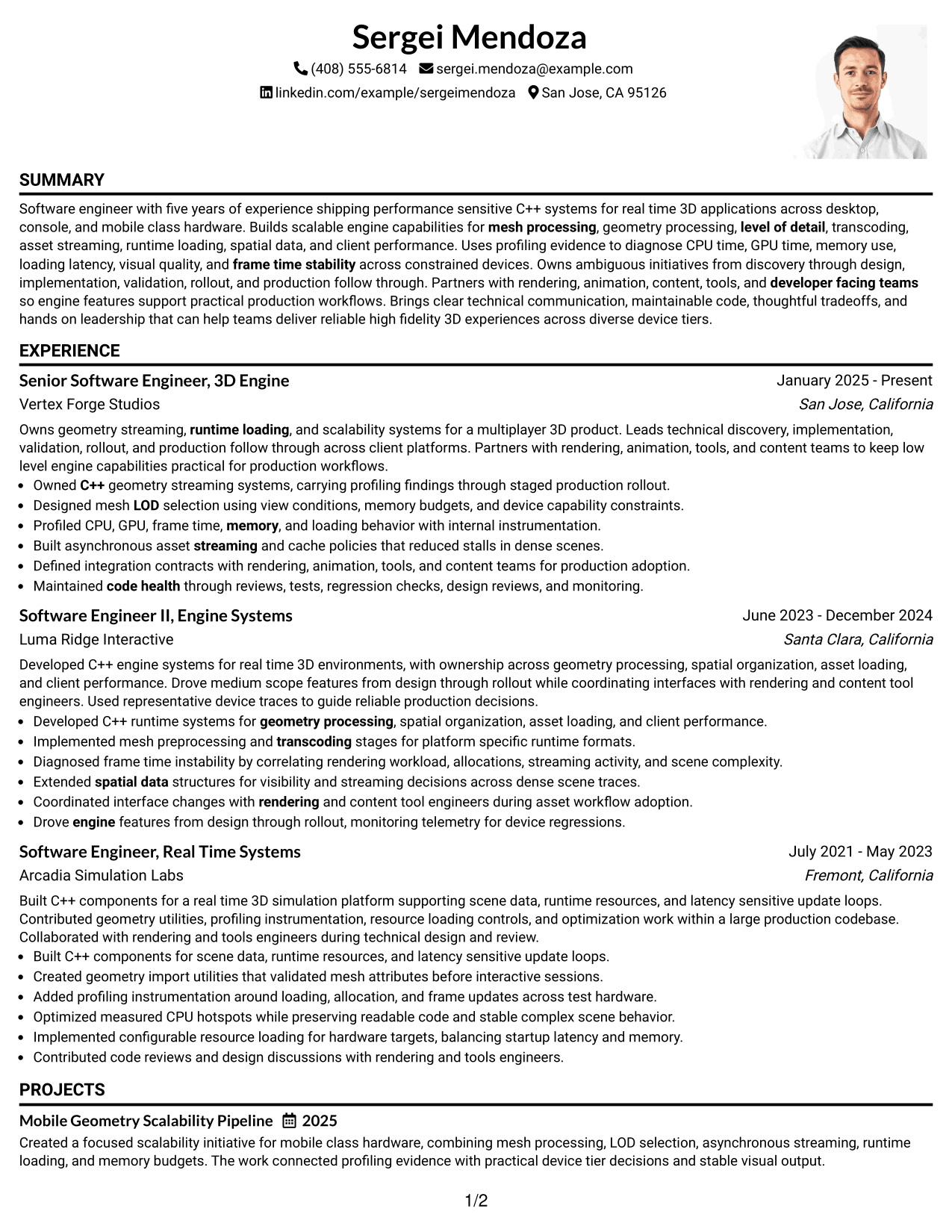
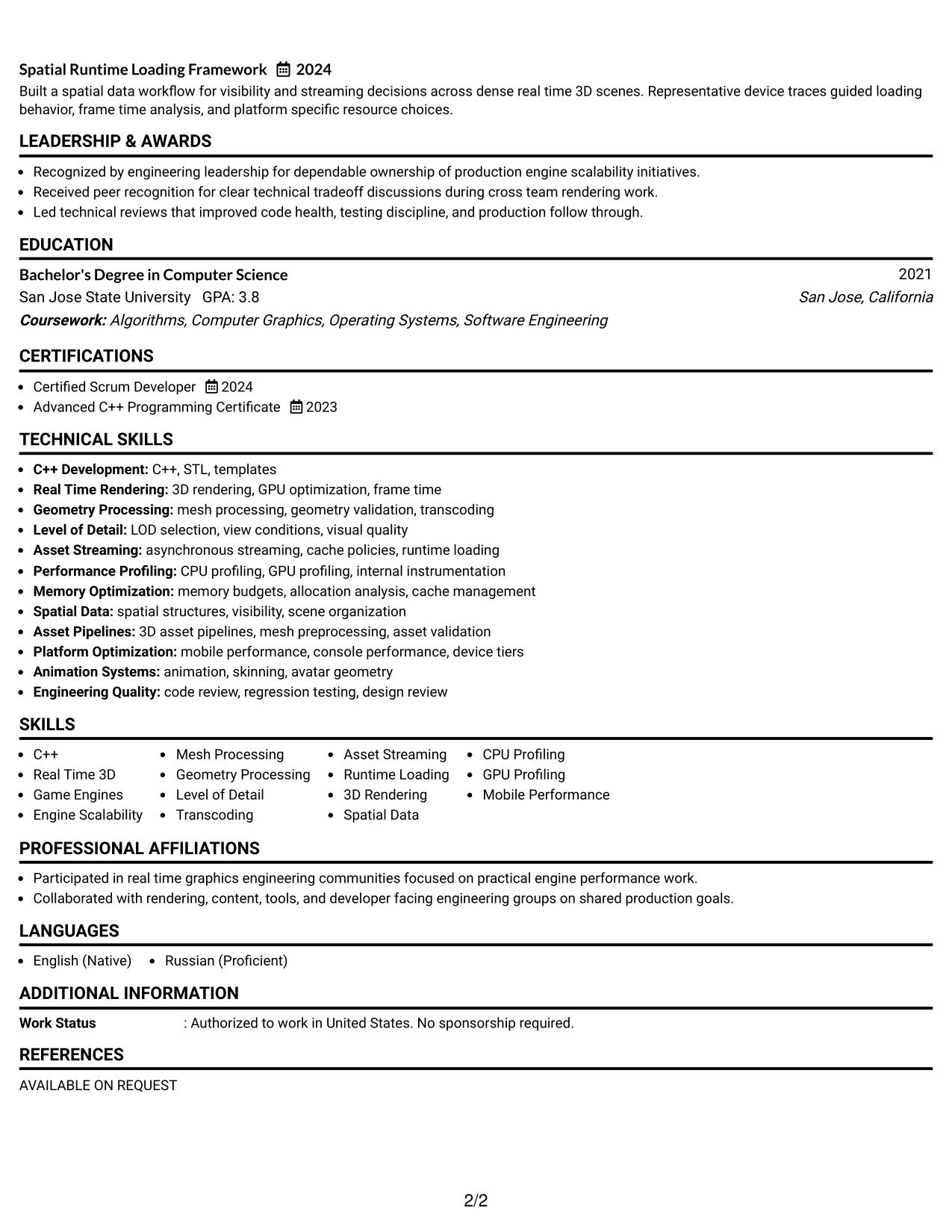
 
Resume Example Page 1   Resume Example Page 2

Why This Format Works

  • One-column body preserves a simple path through experience, achievements, skills, and education.
  • Photo placement stays separate from the main career content and reading sequence.
  • Full-width body space supports detailed achievements without splitting them across columns.

Best For

  • Markets where resume photos are customary
  • Readers who want a simple body flow
  • Experience sections with longer achievement bullets
  • Profiles needing visible personal identification
  • Documents with modest visual differentiation
 

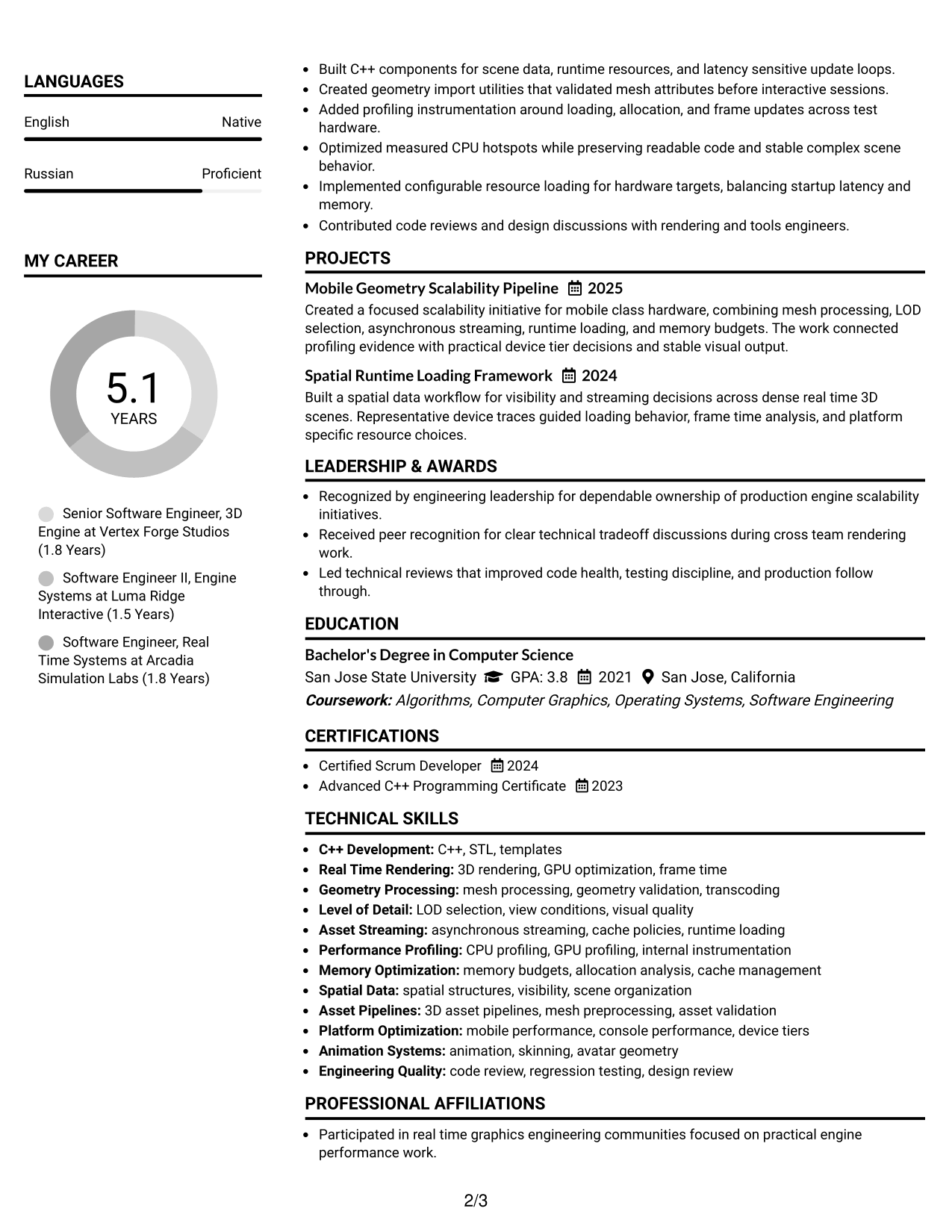
#4 Clean Two Column Sidebar Format Resume Example

A clean sidebar separates compact details from the main column so recruiters can scan in parallel.
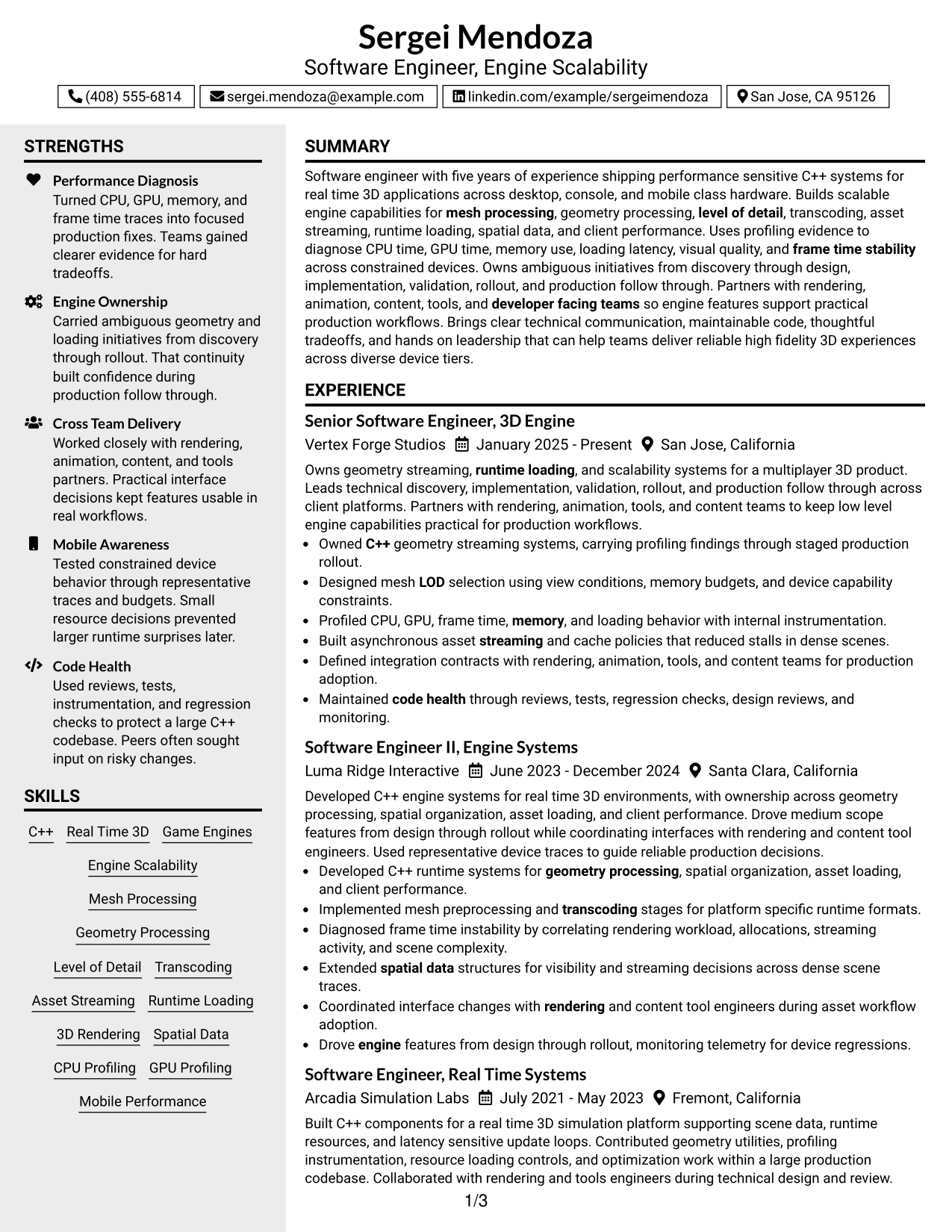
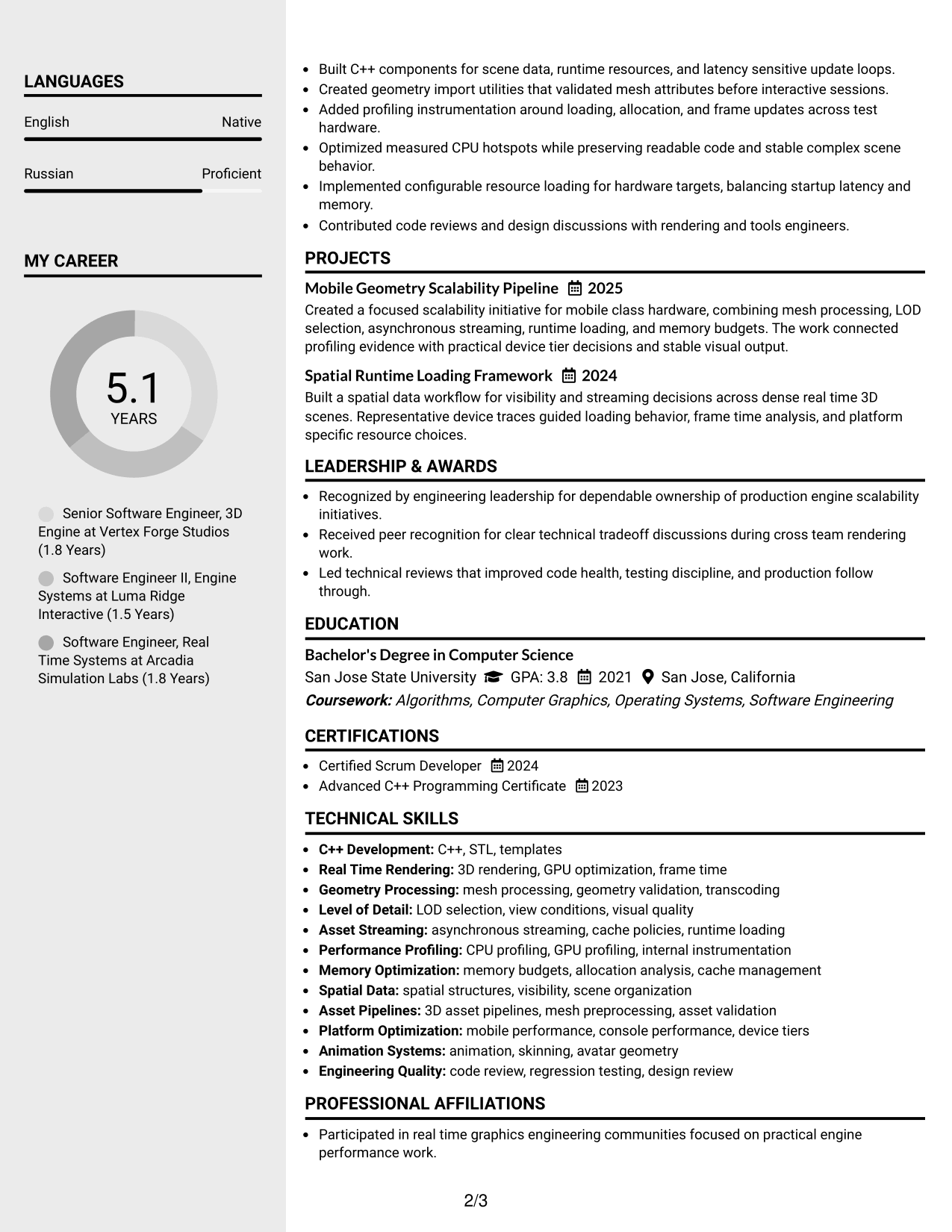
 
Resume Example Page 1   Resume Example Page 2

Why This Format Works

  • Main column gives experience and achievements room for a clear chronological story.
  • Sidebar keeps shorter skills and credentials visible without interrupting career progression.
  • Two-column separation helps reviewers distinguish detailed evidence from compact supporting information.

Best For

  • Resumes with many compact skills
  • Experience needing a strong main column
  • Credentials that benefit from separate grouping
  • Readers who scan summary details first
  • Balanced technical and career information


#5 Two Column Format Resume Example

Two balanced columns let recruiters compare major resume sections without one long vertical scan.
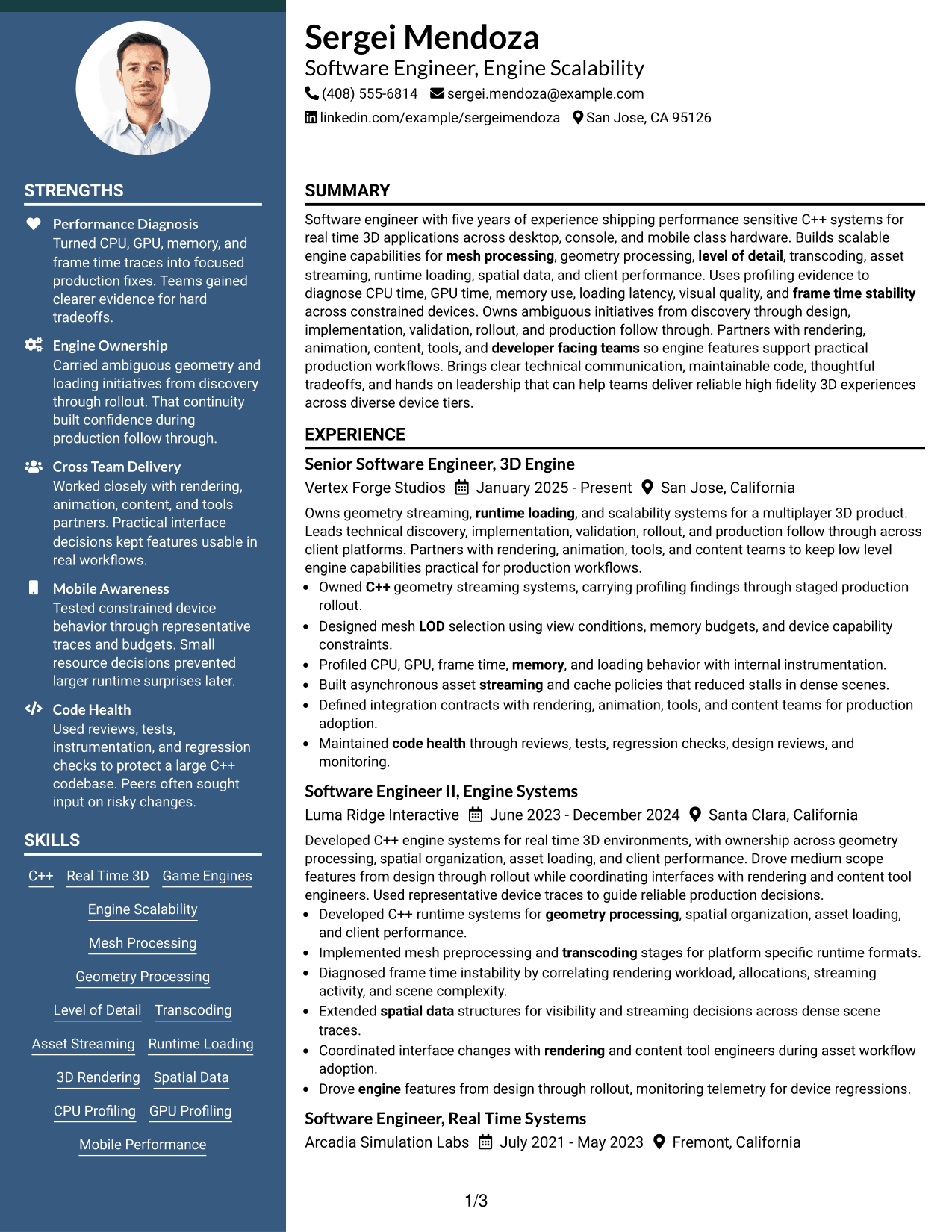
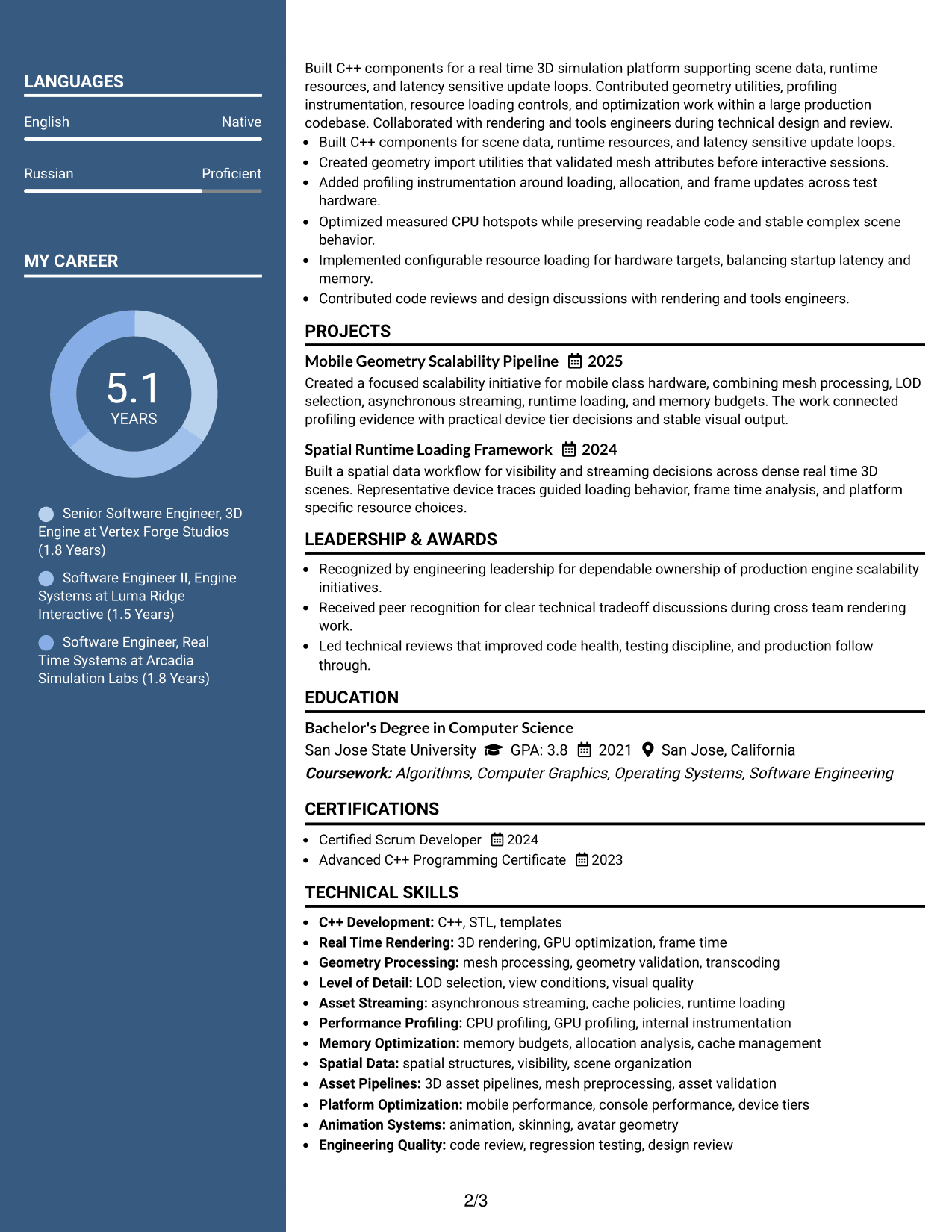
 
Resume Example Page 1   Resume Example Page 2

Why This Format Works

  • Parallel columns reduce vertical distance between experience, skills, education, and project sections.
  • Balanced space helps separate detailed career evidence from shorter supporting sections.
  • Reviewers can compare major content groups without losing the overall resume structure.

Best For

  • Resumes with several equally important sections
  • Readers who compare skills and experience
  • Technical profiles with supporting projects
  • Content that benefits from compact grouping
  • Applications needing efficient visual use of space
 

#6 Photo Header Two Column Format Resume Example

A photo header identifies the applicant while two body columns give recruiters multiple scan paths.
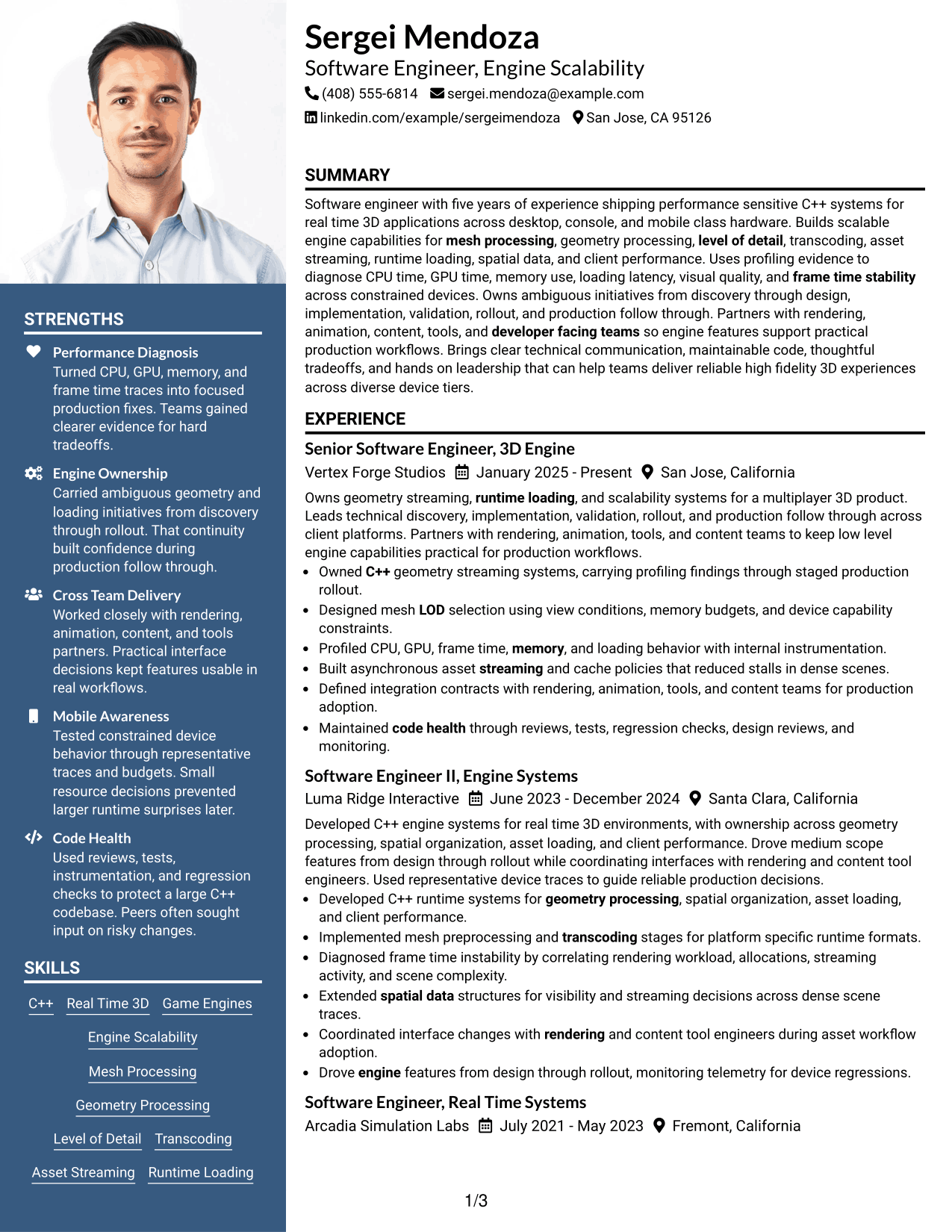
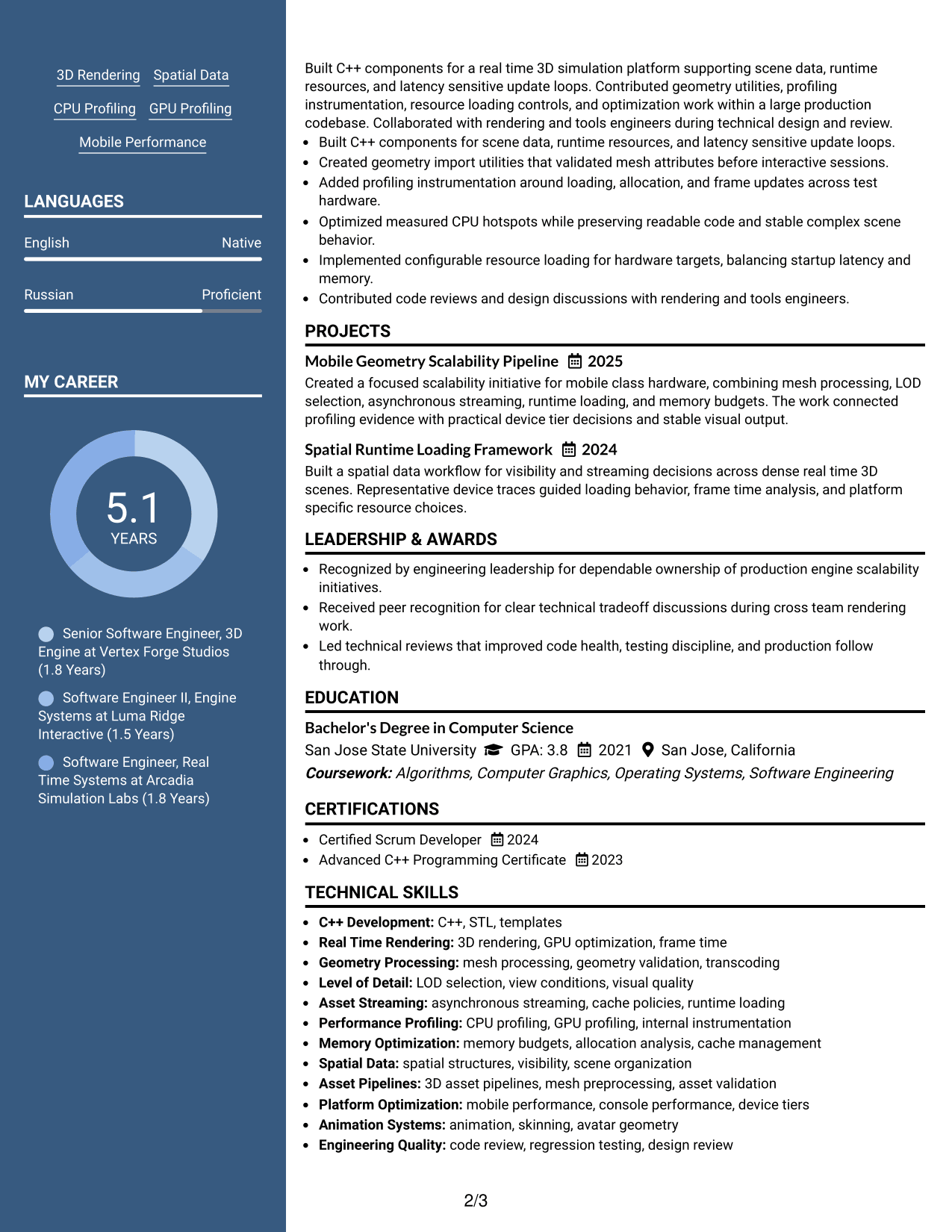
 
Resume Example Page 1   Resume Example Page 2

Why This Format Works

  • Two body columns divide experience and supporting sections into distinct reading areas.
  • Header photo remains separate from achievements, skills, education, and credential organization.
  • Parallel section areas help reviewers move between career evidence and compact details.

Best For

  • Markets where professional photos are expected
  • Resumes with broad supporting information
  • Readers who favor compact two-column review
  • Experience plus several secondary sections
  • Profiles needing identity in the header
 

#7 Simple Two Column Format Resume Example

A simple two-column structure keeps key sections close together for quick recruiter comparison.
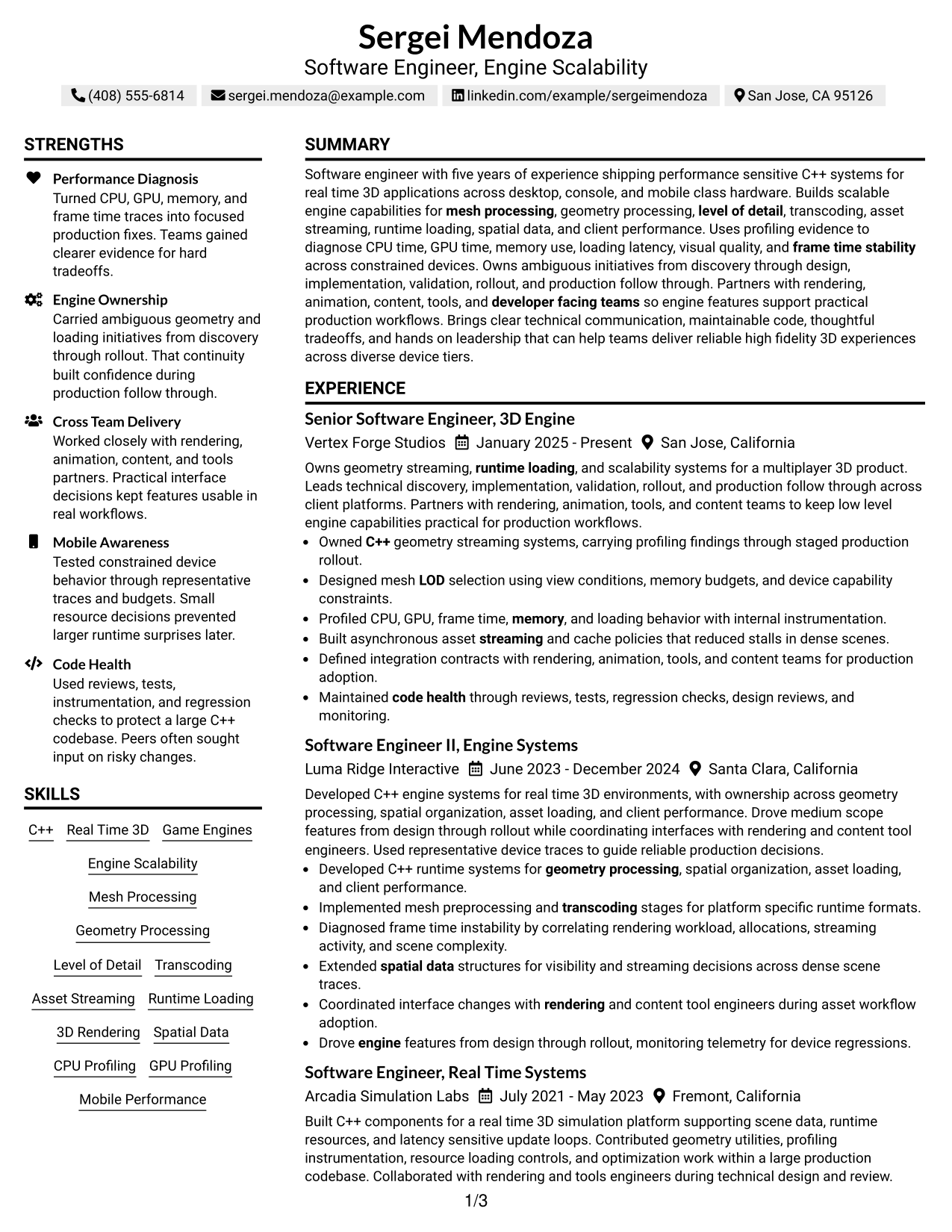
 
Resume Example Page 1   Resume Example Page 2

Why This Format Works

  • Simple column boundaries separate experience from shorter skills, education, and credential sections.
  • Compact organization supports quick comparison without relying on heavy visual decoration.
  • Clear grouping helps reviewers find achievements and supporting qualifications with less scrolling.

Best For

  • Readers who value compact organization
  • Resumes with strong experience and skills
  • Applications needing a simple two-column look
  • Career histories with several supporting sections
  • Technical resumes without a photo


Why Build Your Software Engineer, Engine Scalability Resume with ResumeInMinutes

ResumeInMinutes helps you turn complex engine work into clear resume sections that recruiters can review quickly. You can organize experience, skills, projects, education, and technical evidence without losing important detail.

  • ATS-friendly section structure
  • Keyword-focused resume content
  • Experience and project organization
  • Technical skills grouping
  • Free PDF resume previews
  • Resume customization support

You can adapt the same evidence for a focused Software Engineer, Engine Scalability application while keeping the document readable, consistent, and easy to update.


See Also


Frequently Asked Questions

Are these Software Engineer, Engine Scalability resume templates ATS-friendly?

Yes. The layouts use clear section structure and readable text. Your content should also use accurate role keywords from your own experience, such as C++, engine scalability, LOD, streaming, profiling, and runtime loading.

Are these different resumes?

No. This guide shows one Software Engineer, Engine Scalability resume example in different visual layouts so you can compare how the same content is organized.

What should a Software Engineer, Engine Scalability resume include?

Include a focused summary, professional experience, technical skills, education, relevant projects, and credentials. Show evidence of engine ownership, performance profiling, scalability decisions, code health, and cross-team delivery when those facts are supported by your background.

Can I download the resume templates as PDFs?

Yes. Each resume style provides a free PDF download so you can review the visual structure before choosing a format.

Which resume style works well for engine scalability roles?

A clear one-column format gives a direct reading order, while a two-column format can separate compact skills or credentials from the main experience story. Choose the layout that keeps your strongest evidence easy to find.

How should I present performance optimization work?

Describe the problem, the profiling evidence you used, the change you made, and the result. Keep claims specific and measurable when you have verified numbers, and avoid inventing metrics.

Should I include a photo on my resume?

Include a photo only when it is customary or expected in the country or market where you apply. For most U.S. applications, a no-photo resume is generally the safer choice.

Can I customize these resume templates?

Yes. You can edit the resume text and choose a layout that supports your experience, skills, projects, education, and target Software Engineer, Engine Scalability application.

ATS score 82%

How we calculate this score

  • Keywords: 60% of the total. AI extracts keywords from your job description. If you do not provide one, a standard job description for the title matching your resume is used. This is not a match to a specific vacancy.
  • Text-based resume: 20%. The text resume assessed here receives 100 for this part.
  • Resume quality: 20%. We start at 100 and subtract points for issues found by our resume checks, down to a minimum of zero.
  • Keyword coverage = 100 × (confirmed matches + 0.8 × possible matches) ÷ total keywords, rounded and capped at 100. Possible matches still need checking. Saved generation audits use their saved keyword percentage.
  • Final score = 60% of keyword coverage + 20% of the text score + 20% of the quality score, rounded to a whole number. Without keywords, no overall ATS score is available.

What this score means

Our scores are estimates, not employer ratings. They may contain errors and do not guarantee accurate parsing, a ranking, an interview, or a job. Check your document against the employer’s requirements. You are responsible for relying on this score.

Terms and Conditions

Score weights: Keywords 60% · Text based resume 20% · Resume quality 20%

Live keyword match: 32 of 46 (70%) · Resume quality: 100%

Resume quality 100% · Weight 20% · Issues (0)

Details
  • ✓Name present: Sergei Mendoza
  • ✓Email format: sergei.mendoza@example.com
  • ✓Phone format: (408) 555-6814
  • ✓Experience 1: Job title: Senior Software Engineer, 3D Engine
  • ✓Experience 1: Company name: Vertex Forge Studios
  • ✓Experience 1: Employment dates: January 2025 - Present
  • ✓Experience 1: Description or achievements: Present
  • ✓Experience 2: Job title: Software Engineer II, Engine Systems
  • ✓Experience 2: Company name: Luma Ridge Interactive
  • ✓Experience 2: Employment dates: June 2023 - December 2024
  • ✓Experience 2: Description or achievements: Present
  • ✓Experience 3: Job title: Software Engineer, Real Time Systems
  • ✓Experience 3: Company name: Arcadia Simulation Labs
  • ✓Experience 3: Employment dates: July 2021 - May 2023
  • ✓Experience 3: Description or achievements: Present
  • ✓No placeholder fields
  • ✓No repeated achievement bullets
  • ✓No empty bullets

No issues found by the current checks.

Text Based Resume 100% · Weight 20%

Parsed text
Sergei Mendoza
(408) 555-6814
sergei.mendoza@example.com
linkedin.com/example/sergeimendoza
San Jose, CA 95126
SUMMARY
Software engineer with five years of experience shipping performance sensitive C++ systems for real time 3D applications across desktop, console, and mobile class hardware. Builds scalable engine capabilities for mesh processing, geometry processing, level of detail, transcoding, asset streaming, runtime loading, spatial data, and client performance. Uses profiling evidence to diagnose CPU time, GPU time, memory use, loading latency, visual quality, and frame time stability across constrained devices. Owns ambiguous initiatives from discovery through design, implementation, validation, rollout, and production follow through. Partners with rendering, animation, content, tools, and developer facing teams so engine features support practical production workflows. Brings clear technical communication, maintainable code, thoughtful tradeoffs, and hands on leadership that can help teams deliver reliable high fidelity 3D experiences across diverse device tiers.
EXPERIENCE
Senior Software Engineer, 3D Engine
Vertex Forge Studios
January 2025 - Present
San Jose, California
Owns geometry streaming, runtime loading, and scalability systems for a multiplayer 3D product. Leads technical discovery, implementation, validation, rollout, and production follow through across client platforms. Partners with rendering, animation, tools, and content teams to keep low level engine capabilities practical for production workflows.
Owned C++ geometry streaming systems, carrying profiling findings through staged production rollout.
Designed mesh LOD selection using view conditions, memory budgets, and device capability constraints.
Profiled CPU, GPU, frame time, memory, and loading behavior with internal instrumentation.
Built asynchronous asset streaming and cache policies that reduced stalls in dense scenes.
Defined integration contracts with rendering, animation, tools, and content teams for production adoption.
Maintained code health through reviews, tests, regression checks, design reviews, and monitoring.
Software Engineer II, Engine Systems
Luma Ridge Interactive
June 2023 - December 2024
Santa Clara, California
Developed C++ engine systems for real time 3D environments, with ownership across geometry processing, spatial organization, asset loading, and client performance. Drove medium scope features from design through rollout while coordinating interfaces with rendering and content tool engineers. Used representative device traces to guide reliable production decisions.
Developed C++ runtime systems for geometry processing, spatial organization, asset loading, and client performance.
Implemented mesh preprocessing and transcoding stages for platform specific runtime formats.
Diagnosed frame time instability by correlating rendering workload, allocations, streaming activity, and scene complexity.
Extended spatial data structures for visibility and streaming decisions across dense scene traces.
Coordinated interface changes with rendering and content tool engineers during asset workflow adoption.
Drove engine features from design through rollout, monitoring telemetry for device regressions.
Software Engineer, Real Time Systems
Arcadia Simulation Labs
July 2021 - May 2023
Fremont, California
Built C++ components for a real time 3D simulation platform supporting scene data, runtime resources, and latency sensitive update loops. Contributed geometry utilities, profiling instrumentation, resource loading controls, and optimization work within a large production codebase. Collaborated with rendering and tools engineers during technical design and review.
Built C++ components for scene data, runtime resources, and latency sensitive update loops.
Created geometry import utilities that validated mesh attributes before interactive sessions.
Added profiling instrumentation around loading, allocation, and frame updates across test hardware.
Optimized measured CPU hotspots while preserving readable code and stable complex scene behavior.
Implemented configurable resource loading for hardware targets, balancing startup latency and memory.
Contributed code reviews and design discussions with rendering and tools engineers.
PROJECTS
Mobile Geometry Scalability Pipeline
2025
Created a focused scalability initiative for mobile class hardware, combining mesh processing, LOD selection, asynchronous streaming, runtime loading, and memory budgets. The work connected profiling evidence with practical device tier decisions and stable visual output.
Spatial Runtime Loading Framework
2024
Built a spatial data workflow for visibility and streaming decisions across dense real time 3D scenes. Representative device traces guided loading behavior, frame time analysis, and platform specific resource choices.
LEADERSHIP & AWARDS
Recognized by engineering leadership for dependable ownership of production engine scalability initiatives.
Received peer recognition for clear technical tradeoff discussions during cross team rendering work.
Led technical reviews that improved code health, testing discipline, and production follow through.
EDUCATION
Bachelor's Degree in Computer Science
San Jose State University
GPA: 3.8
2021
San Jose, California
Coursework: Algorithms, Computer Graphics, Operating Systems, Software Engineering
CERTIFICATIONS
Certified Scrum Developer
2024
Advanced C++ Programming Certificate
2023
TECHNICAL SKILLS
C++ Development: C++, STL, templates
Real Time Rendering: 3D rendering, GPU optimization, frame time
Geometry Processing: mesh processing, geometry validation, transcoding
Level of Detail: LOD selection, view conditions, visual quality
Asset Streaming: asynchronous streaming, cache policies, runtime loading
Performance Profiling: CPU profiling, GPU profiling, internal instrumentation
Memory Optimization: memory budgets, allocation analysis, cache management
Spatial Data: spatial structures, visibility, scene organization
Asset Pipelines: 3D asset pipelines, mesh preprocessing, asset validation
Platform Optimization: mobile performance, console performance, device tiers
Animation Systems: animation, skinning, avatar geometry
Engineering Quality: code review, regression testing, design review
SKILLS
C++
Real Time 3D
Game Engines
Engine Scalability
Mesh Processing
Geometry Processing
Level of Detail
Transcoding
Asset Streaming
Runtime Loading
3D Rendering
Spatial Data
CPU Profiling
GPU Profiling
Mobile Performance
PROFESSIONAL AFFILIATIONS
Participated in real time graphics engineering communities focused on practical engine performance work.
Collaborated with rendering, content, tools, and developer facing engineering groups on shared production goals.
LANGUAGES
English (Native)
Russian (Proficient)
ADDITIONAL INFORMATION
Work Status
: Authorized to work in United States. No sponsorship required.
REFERENCES
AVAILABLE ON REQUEST

Matched keywords (32)

  • Software engineer
  • engine scalability
  • C++
  • Game Engines
  • mesh processing
  • level of detail
  • LOD
  • transcoding
  • streaming
  • runtime loading
  • avatar geometry
  • CPU time
  • GPU time
  • memory
  • loading latency
  • visual quality
  • frame time stability
  • mobile
  • console
  • geometry processing
  • animation
  • skinning
  • spatial data
  • 3D asset pipelines
  • large production codebase
  • technical communication
  • rendering
  • avatar
  • engine
  • developer facing teams
  • code health
  • technical tradeoff

Missing keywords (14)

  • high performance systems
  • real time simulation
  • robotics
  • AR/VR
  • environment geometry
  • real time 3D rendering
  • GPU client performance
  • end to end ownership
  • content creation
  • external developers
  • visual fidelity
  • runtime responsiveness
  • resource constraints
  • cross device scalability
Disclaimer: All names, images, contact information, employment histories, achievements, security clearances, military credentials, and other qualifications shown in this content are fictional and used for illustrative purposes only. Any resemblance to actual persons, living or deceased, is purely coincidental.

Resume and cover-letter examples and recommendations in this article reflect general best practices and professional experience and are provided for guidance only. Results may vary based on role, industry, region, and hiring organization.

Content Accuracy and Verification: To the fullest extent permitted by applicable law, we do not represent or warrant that resume or cover-letter guidance, examples, recommendations, or related information are accurate, complete, current, error-free, or suitable for any particular purpose. You are responsible for independently reviewing and verifying the information before relying on it.

ATS and Cover-Letter Scores: ATS scores are estimates calculated using our own formula, informed by publicly available guidance on resume formatting and keyword matching. They are not scores issued or endorsed by an ATS provider or employer. Cover-letter scores are also our own assessments. Parsing, weighting, screening criteria, and results vary between systems, employers, job descriptions, and document formats. No score guarantees successful parsing, a particular ranking, an interview, or employment. Use scores as general guidance and independently check your documents against the employer’s requirements. To the fullest extent permitted by applicable law, we accept no liability for errors in scores or parsing, or losses arising from reliance on these assessments. Nothing in this notice excludes liability or limits consumer rights that cannot lawfully be excluded or limited.

Terms and Conditions
 
> JP 1 1
PDF Footer and Margins Setup
The margins are applied to the document, and the footer shows up in the preview and the PDF

Footer Font Settings

Are you applying for a specific job
so we can tailor your resume to it?
Are you applying for a specific job
so we can tailor your cover letter to it?
Type your details as text to generate a personalized resume Type your details as text to generate a personalized cover letter
Website link found! Ready to create resume from:
Drag the into the box to verify you're human.
Drop here

My Resumes

Displaying {number_of_files} files (out of {total_of_all_files} total)
Name File Type Last Modified: Description:

Rename File

Filename already exists!

Delete Files

Warning: This action is irreversible. Once you click submit, the files will be permanently deleted.

Heading text
Upload From Computer Upload
Select From Existing
LinkedIn
Drag & Drop files anywhere in this tab, or

Uploaded Files

Delete Name Last Updated Use This File
Select this to use the file for generating your resume and cover letter. Only one source—uploaded file, selected file, or LinkedIn text—can be used.

My Files

Resumes or cover letters you create will appear here. No files available yet.
Delete Name Last Updated Use This File
Select this to use the file for generating your resume and cover letter. Only one source—uploaded file, selected file, or LinkedIn text—can be used.

Add LinkedIn Profile PDF

You can download your LinkedIn profile as a PDF by opening linkedin.com in a web browser, clicking your profile photo, selecting the “More” or “Resources” button, and choosing “Save to PDF.” You can then attach the PDF using the Upload From Computer tab.

Paste Your LinkedIn Profile Text

If you have copied the LinkedIn profile text, paste it below. See how to copy your profile from LinkedIn

Select this to use the LinkedIn profile text for generating your resume and cover letter. Only one source—uploaded file, selected file, or LinkedIn text—can be used.

Try these controls

<
>